Showing posts with label historical. Show all posts

Back at it with Harriet, For Sama and Honeyland

I'd like to say my delay in posting these reviews was due to some wonderful reason, like I was meditating in Tibet with the Dalai Lama or I was on a secret mission or the space bar was stuck on my laptop. Alas, nothing quite so dramatic, just a lot of The Office episodes, afternoon naps and a smattering of ennui. By this time, you may have already seen the films below, and if not, given the current world situation, you may have some extra time on your hands.

1/29/20 Harriet, nominated Best Actress, Best Original Song, 2019 

A friend of mine, who is more of a movie geek than I am, didn't really like Harriet; not because the topic wasn't worthy, she just thought it should paint Harriet Tubman as less of a comic superhero and more of a real person. This was hard for me to wrap my head around, because as far as I'm concerned, the woman was pretty superhuman, I mean I get lost (really) in my own neighborhood, and I have GPS; Harriet Tubman walked hundreds of miles in the wilderness with only the stars to guide her, all the while fighting off headaches and 'spells' from a blow to the head when she was younger. AND, she wasn't traveling alone, as she was bringing slaves out of the South into the free North, and none of her 'passengers' was killed. That is pretty amazing to me. Cynthia Erivo was amazing as Harriet Tubman (who SHOULD be on the $20 by now), bringing a no nonsense and can do attitude to her mission of leading slaves to freedom. Tubman escaped from slavery in Maryland by walking, maybe hitching a ride in a wagon to Philadelphia. In an effort to save her family and be reunited with her husband, she went back to Maryland many times to help family members and others escape. There are some big names in supporting roles including Leslie Odom, Jr. as William Still, an abolitionist affiliated with the Underground Railroad; Jennifer Nettles as Eliza Brodess, the widow of Harriet's owner; and Janelle Monae as Marie Buchanon who owned a boardinghouse where Harriet found respite and friendship. I suppose it was a forgone conclusion that Renee Zellweger was going to win for her role as Judy Garland, but I was pulling for Cynthia Erivo. I also loved the song "Stand Up", especially after the performance at the Oscars. I wouldn't say that a film about slavery is necessarily a family film, except this is more than that; it's about a woman, facing horrible circumstances and incredible odds to do amazing things, never giving up. She wasn't just an inspiring woman, but an inspiring human. If you haven't seen it, I strongly recommend doing so.

2/2/20 Pain and Glory, nominated Best Actor, Best International Feature Film, 2019

Um. Yeah. I was going to write that I'm hot and cold on Pedro Almodovar films, but in all honesty, I have to say I'm mostly cold. I did not care at all about the highs and lows of director Salvador Mallo (Antonio Banderas), his loves, his drug addiction, his childhood. That's basically what the movie is about. There are highbrow critics who thought this was the best movie of 2019 or the best of Banderas's career, but I don't think so. In fact, I would put this in the category of "I stopped caring after 15 minutes". Use that two hours to see something else on this list.

2/5/20 For Sama, nominated Best Documentary Feature, 2019

Sadly, Syria has become an incubator for documentary films over the past five years (or longer?) due to the civil war, oppression and brutal attacks on its civilian population. I have not yet seen The Cave, also from Syria, but I did watch For Sama, and boy, it was tough. Waad al-Kateab is filming her daily life and that of her husband and friends as they valiantly try to tend to the sick, wounded and dying in Aleppo, Syria, while dodging bombs and coping with shortages. During filming, Waad discovers she is pregnant, which raises existential questions for her, like who would knowingly bring a child into this world? It is heartbreaking watching the doctors and nurses try to bail out a sinking ship with a paper cup, trying not to give up and hoping the and waiting for the rest of the world to help. There is a small glimmer of hope, but you have to look hard to see it, but I still think you should watch.

2/7/20 The Edge of Democracy, nominated Best Documentary Feature, 2019

I don't know if it was because I was watching this right before going to bed or what, but it took five nights to watch this documentary about the nascent democracy movement in Brazil. Petra Costa, the director, had some direct connections to former President Lula through her parents' activities in Brazil. It was definitely interesting and gave me a perspective into a country which I have been fascinated with for a long time, and it has implications for the current political situation in Brazil. Stick with it and take a few nights if you need to.

2/15/20 Honeyland, nominated Best Documentary Feature, Best International Feature Film, 2019

Honeyland was one of my favorite movies of all the nominees. It was beautifully filmed and showcased a woman I would love to meet, Hatidze Muratova, a wild beekeeper in North Macedonia, a country in the Balkans, bordering Kossovo, Serbia, Bulgaria, Greece and Albania, a true melting pot of cultures, languages and religions. The film follows Hatidze as she collects honeycomb to 'grow' and nurture her own hives, using just smoke and maybe a face covering to protect herself from the bees. She sells the honey she harvests to buy necessities for her and her elderly mother, maybe treating herself to hair coloring. Her mother is an invalid, blind and hard of hearing, and the exchanges between the two of them are heartwarming and heartbreaking. Hatizde has lived on this land her whole life and it has been in her family for generations. Her life is about to undergo a change when a family of nomads moves in next door; at first, I think she's glad of the company, people to laugh with, share meals with, teach the children the ways of honey bees, but then it turns into one of those nightmarish movies, like Neighbors, and things don't end very well. But Hatizde has a spirit that might dim, but, I felt it still burned, even though it was subdued. I just loved this movie. If you are looking for something different, or maybe you're homeschooling and want to do some World History/Geography/Environmental studies, you would get your money's worth with this movie. Do not be afraid of the subtitles, there is so much that you can infer and feel without understanding the language. Consider all the crap movies you have watched and how you're like, well, that was two hours of my life I'll never get back, and then watch Honeyland and feel redeemed. It will do your soul good, I promise.

Best Picture Nominees: 1917, Parasite, Jojo Rabbit, Once Upon a Time in Hollywood

1/19/20 1917, nominated Best Picture, Best Director, Best Original Screenplay, Best Original Score, Best Cinematography, Best Makeup and Hairstyling, Best Production Design, Best Sound Editing, Best Sound Mixing, Best Visual Effects, 2019
National World War I Museum and Memorial, Kansas City, MO
1917 sure did get a lot of nominations, but nothing for the actors. I've seen that before, of course I can't remember when, but what does that say about the movie? Is it really the best picture? I don't know. Not for me. It was very good, great effects and the cinematography is spectacular. 1917 is set in northern France near the end of World War I. Lance Corporal Thomas Blake (Dean-Charles Chapman) is given an unenviable, and almost impossible, task of crossing through no-man's land and German territory to warn another regiment. Blake is selected because his brother is in the other regiment; his friend Lance Corporal William Schofield (George MacKay) was the victim of dumb luck. Director Sam Mendes and the production designers do a phenomenal job of recreating the horrible trenches that were such a huge factor in World War I. I really don't want to give away too much of the plot (that's pretty much the company line for the other movies below). I think it was a really good decision to not cast well-known actors in the two main roles, it would have been too distracting; there were cameos by Benedict Cumberbatch and Colin Firth, and I kind of think they were a little distracting. Roger Deakins filmed the movie beautifully and with quite a bit of effort to make it look like one continuous shot. If you're still able to catch the film in the theater, I hope you can see it; some movies should be seen on the big screen and this is definitely one of those. I think it will win a lot of awards, but I don't think it's best picture.
Exhibit of Trench Warfare, National World War I Museum and Memorial, Kansas City, MO
1/25/20 Parasite, nominated Best Picture, Best Director, Best Original Screenplay, Best International Feature Film, Best Production Design, Best Film Editing, 2019

South Korean film Parasite wins the award for the most misleading title. Yes, I do know why it's titled that NOW, but I didn't before I watched it, and the name was one of the reasons I didn't want to see it. Stereotypically, a movie called "Parasite" would be a horror movie, something with an invasive species or something. In case you're wondering, that doesn't happen. What does happen is a story unfolds about class wars, envy, deceit mixed with satire. Don't be put off because it's in Korean, or it has a creepy title, it is an original idea with original characters. Co-written and directed by Bong Joon-ho (Snowpiercer), Parasite has social commentary mixed with some biting sarcasm and a little bit of suspense. We first meet the Kim family, a down-on-their-luck clan, living in cramped basement quarters and leaching off the wi-fi signal of their neighbors and trying many different scams to earn money. When son, Kim Ki-woo, gets a job as an English tutor for Park Da-Hye, the daughter of the wealthy Park family, Ki-woo sees possibilities for his family to improve their situation. And that's all you'll get from me. This is another film that has been nominated for Best Picture, but no actor nominations, which I don't understand, maybe because it was really an ensemble piece with eight 'leads' (well, maybe 6), but there could have been at least a supporting nod for Lee Jeung-eun as the housekeeper. I really liked Parasite, it wasn't a remake, a sequel, a reboot or based on real events (as far as I know); I know I keep harping on the originality, but it was so fresh. I would be willing to bet that an American version will be out in the next five years. I think it will win Best International Feature Film; I haven't seen any of the other nominees, so this is going on past awards and a gut feeling. This is out now on DVD or streaming, so check it out.
Seoul, S. Korea
1/25/20 Once Upon a Time in Hollywood, nominated Best Picture, Best Director, Best Actor, Best Supporting Actor, Best Original Screenplay, Best Cinematography, Best Costume Design, Best Production Design, Best Sound Mixing, Best Sound Editing, 2019

Sigh. 161 minutes, everyone I know has commented on how long The Irishman is, but nobody has complained about the length of Once Upon a Time in Hollywood, but they were both too long. I liked half the premise, a visit to old Hollywood and the shows of the 1950s and 1960s, a washed up actor, Rick Dalton, (Leonardo DiCaprio) trying to be relevant again. I also thought it was an interesting twist to include his stuntman/driver/gopher, Cliff Booth, (Brad Pitt) in the mix, creating the buddy movie element. Parallel to Rick and Cliff trying to find work is the introduction of the Manson Family and Sharon Tate (Margot Robbie), Roman Polanski and friends; eventually they all intersect. Eh. DiCaprio and Pitt were both nominated for Oscars, Best Actor and Best Supporting Actor, respectively, but I didn't see anything in DiCaprio's performance (compared to his own past performances and other 2019 nominees) that deserved an Oscar nod. I thought Pitt's performance was worthy of the nomination, I thought he was more fun to watch and had better scenes. I think the Best Actor is probably going to go Joaquin Phoenix, but I'm not sure about Best Supporting Actor.

1/26/20 Jojo Rabbit, nominated Best Picture, Best Supporting Actress, Best Adapted Screenplay, Best Production Design, Best Costume Design, Best Film Editing, 2019

Jojo Rabbit is one of my favorite movies of this year because of its originality (with a nod to Mel Brooks), humor, satire, tenderness and the three young actors. Jojo Rabbit is set in the later years of World War II, and ten year-old Jojo (Roman Griffin Davis) has regular conversations with his imaginary friend Adolf Hitler (Taika Waititi, who also wrote and directed) and is eager to join the Hitler Youth with his pal, Yorki (Archie Yates). His patient mother, Rosie (Scarlett Johansson) gently chides Jojo about his dedication to the Fuhrer, while protecting him from a dangerous secret involving a young girl, Elsa (Thomasin McKenzie) hidden in the house. I'm not really sure I can describe more of the story without giving away some of the surprises I had while watching it. I enjoyed watching looking at the world through Jojo's eyes, even as horrible as it could be during a war, as he endured heartbreak, love and small victories, and learned to shed his devotion to Hitler. Also in another terrific supporting role is Sam Rockwell as Captain Klenzendorf; seemingly devoted to the cause because he has to be, not necessarily because he is a rabid believer. He shows Jojo kindness and protection that Adolf can't give. As far as the nominations go, I don't understand thinking a movie is Best Picture, but you don't nominate the director of the movie? I'm not sure how it's going to do against the other nominees, but I know who I'll be rooting for. And I can't wait to see Davis and Yates in more films. I would say if you have not seen Jojo Rabbit, do yourself a favor and watch it. I may watch it again after the awards.

2019 films: The Irishman and Knives Out

It seems from February until Thanksgiving cinema is a vast wasteland, filled with throwaway movies. I've learned over the eight years of doing this blog that I can pretty much wait until November before I have to worry about serious Oscar contenders. Sure, there's always the odd special effects nominee or underdog picture that sneaks onto the coveted list of nominated films, but not as often as you would think. It's time to focus, because nomination morning will be here before I know it.

12/1/19 The Irishman, 2019, not yet nominated

I can't address how many, or if any, of the events in The Irishman are true or accurate, that's probably the purview of another blog and another writer (or two or three), however, Martin Scorsese's film about the purported events in the life of Frank 'The Irishman' Sheeran  (played by Robert DeNiro), Jimmy Hoffa (Al Pacino) and other members of the mob are definitely worth watching. The three plus hours goes pretty fast (although to be honest, I had to split it out over three nights), and some of the story lines were familiar to me, and the acting was really terrific. Joe Pesci is Russell Bufalino and he exercises a lot of control and influence very quietly, he lets other people throw punches, shoot guns and otherwise get their hands dirty. Pacino is a little over the top as Hoffa, but I guess Hoffa was a larger than life character. The movie follows Sheeran's rise through the Bufalina organization, from driving trucks to work that was a little more violent, to working with/for Jimmy Hoffa. Sheeran narrates the film, taking us back through time; there are a lot of time jumps, so you do have to pay attention (sometimes I don't do that very well). There is also a parade of characters, some with similar names or appearances and it can get confusing (back to that paying attention part). It's a  little like Goodfellas meets The Sopranos. One of the things about the movie that's getting some attention is the digital de-aging of the actors, many of whom are in their 60s, taking them back to their 20s, 30s, etc. The mystery of what happened to Jimmy Hoffa and where his body is still remains a topic of interest as evidenced by the buzz the movie has received. We'll see how the nominations shake out because the movie was distributed by Netflix and had a very limited theatrical release, which rubs some voting members the wrong way, who may still be bitter that Roma (also distributed by Netflix) did so well last year.

12/5/19 Meeting Gorbachev, 2018

With all of the craziness in the world these days, especially around international relations and threats to ramp up nuclear weapons from various quarters, it felt like a good time to watch this documentary by Werner Herzog and Andre Singer about Mikhail Gorbachev. Growing up during the Cold War and actually remembering many of the events from the 1970s and 1980s, I appreciated seeing them from Gorbachev's perspective and with historical context. Gorbachev was the polar opposite of his predecessors, which while that worked to the West's advantage, it turned out to be his political death knell. In ninety minutes, Herzog takes us through Gorbachev's rise in the Communist Party; his relations with Western leaders including Ronald Reagan, Margaret Thatcher and Helmut Kohl; his beloved wife, Raisa (I don't think I can name any other wife of a Soviet leader, or most leaders, but we knew Raisa) and his family; and his sad decline, in health and status. Herzog is an amazing filmmaker, and I have seen may of his feature films and his documentaries, and my only qualm with him is that sometimes he injects himself into the story. I guess it works on some level and sometimes gives us more insight, but still, I occasionally wish he would shush. If you're a political science nut or a history buff, I totally recommend watching this film.

12/6/19 Knives Out, 2019, not yet nominated

When I first saw the trailers for Knives Out, I immediately thought of Robert Altman and Gosford Park (I have since read that writer/director Rian Johnson used that film as one of his inspirations). I really don't want to give anything away about this star-studded ensemble murder-mystery because it's still out and I'm recommending it to anyone who asks and I want it to be a surprise. Christopher Plummer is Harlan Thrombey, a famous mystery writer whose death throws his family into chaos. His family members include his eldest daughter, Linda (Jamie Lee Curtis) and her husband, Richard (Don Johnson who was actually pretty good) and their ne'er do well son, Ransom (Chris Evans); his younger son, Walt (Michael Shannon); his daughter-in-law Joni (Toni Colette); and other assorted family members. Harlan also has a nurse, Marta (Ana de Armas), who provides medical care but also friendship, and she seems to be the only person who has no expectations from Harlan. Harlan's death appears to be a suicide, but someone has contacted private detective, Benoit Blanc (Daniel Craig with a delicious Southern accent) to dig a little deeper. This is where I have to stop for fear of revealing a clue. The main setting for the film is a beautiful, creepy estate and the interior sets are clever. There is a lot to pay attention to visually. The performances are terrific, quirky, funny, surprising, and de Armas as Marta was a fabulous surprise (she was in Blade Runner 2049, which I barely remember watching), keeping up with the veteran cast and giving them a run for their money; I look forward to seeing her in more films. Benoit Blanc is a great departure for Craig, and he seems to savor it; I think he would get along famously with Hercule Poirot if that was possible on time-space continuum. I don't normally go to movies with people, but this would be an exception to the rule if I hadn't already seen it; there's a lot to discuss afterward.

12/6/19 Alice Doesn't Live Here Anymore, Best Actress, 1974

I watched Alice Doesn't Live Here Anymore totally by fluke, but since it was on The List it was a happy fluke. It was also a bit of coincidence because it was directed by Martin Scorsese forty-five years ago. Alice was one of his earliest films, squeezed in between Mean Streets and Taxi Driver. Ellen Burstyn stars as Alice Hyatt, a housewife who is married to an abusive man who has squashed her dreams of becoming a singer. After he is killed in a truck accident, Alice packs up her son, Tommy, and heads to California, making a few stops along the way. One of her longest stays is in Tucson where she lands a job at Mel & Ruby's Diner (Vic Tayback plays grumpy Mel) where she bumps heads with sassy Flo (Diane Ladd) and meets David (Kris Kristofferson) a regular customer and a local rancher who has romantic intentions. Heading into 2020, it might not seem to be a big deal to have a woman headlining a film, but in 1974, the early days of the women's movement and a time when most female roles in movies were wives, helpmates, mothers, sex kittens, it was a big deal. Alice Hyatt is forced to become the head of her small family unit, making decisions (some of them questionable), raise her son and maybe follow her dream. Burstyn brings a level of humanity and reality to Alice, she loves her son, but struggles with his wise-ass attitude; she wants to be loved, but has learned her self-respect is worth more. It's probably not a movie on most people's watch list, but it was recently on Turner Classic Movies, and if you catch it, you should give it try. It's interesting to note that Harvey Keitel appears in the movie as Ben, one of Alice's questionable decisions; it was Keitel's third film with Scorsese (third of many); Jodi Foster plays Tommy's friend, Audrey, and she starred in Scorsese's next film, Taxi Driver (along with Keitel and Robert DeNiro). Alice was turned into a 30 minute sitcom starring Linda Lavin; Tayback reprised his role as Mel; Diane Ladd was in the series as a replacement for Polly Holliday's Flo.

Beating back writer's block: Mary, Queen of Scots, Free Solo, Rango

It's been a while, a pretty long while as a matter of fact. I have no excuse. So, without further ado, here we go.

4/2/19 Mary, Queen of Scots, nominated Best Costume Design and Best Hair and Makeup, 2018 

I know I said I didn't really have an excuse, but I think I am going to blame Mary, Queen of Scots starring Saoirse Ronan as Queen Mary and Margot Robbie as Queen Elizabeth I. Yup, that's my story. When I initially heard about the movie, I was excited because the Elizabethan period is so lush with characters and intrigue and costumes. Sadly, that excitement left pretty quickly. I would say as soon as I heard Queen Mary speak with a Scottish accent, I was disappointed. It didn't stop there. Oh, let me clarify, even though Mary was Queen of the Scots, she was raised in France and wouldn't have had that accent. It didn't stop there, from casting decisions to not great acting to a not great script and a total disgregard for history (there may have been a teeny tiny disclaimer that they were just using history as a suggestion, but I didn't see it). It is pretty to look at, but I wouldn't spend two hours watching this land of make believe. In case you didn't pick it up from the other clues, the movie focuses on the relationship between Mary and Elizabeth, cousins and rivals. Whew, crossed that one off the list.

4/11/19 Free Solo, Best Documentary, 2018

My preference for best documentary was RBG, the film about Justice Ruth Bader Ginsberg. Free Solo features Alex Hohnhold, a quirky, but focused, free solo climber, and his attempt to free solo up El Capitan in Yosemite National Park. Free solo climbing is done without ropes, pulleys, ladders or nets, so clearly, a challenging sport regardless of the locale, however, adding El Capitan into the mix, makes the climb one of the most difficult climbs undertaken. The film gives the viewer insight into Hohnhold's preparations, his relationship with his girlfriend, and a little bit of a look into his past and what motivates him. There are a few minutes of an interview with his mother, but she seemed a little distant and I got the vibe they weren't that close (I'm happy to be wrong in that perception). It's clear that Alex needs to climb, that's where he seems the most comfortable: climbing, prepping for a climb, talking about a climb. A friend of mine saw the movie in the theater with an audience (something I avoid as much as possible) and said you could hear the collective gasps of the audience as Alex made his way up the cliff, and that added to the suspense and thrill of watching the movie. I watched it at home, on my old boxy tv, by myself, and I knew how it ended. Two very different experiences, and whether my opinion would have been different, I'll never know, but I did like the movie, appreciated Hohnhold's (and the crew's) courage and strength and determination, but I didn't love it. I loved RBG, which I should say, in full disclosure, I saw in a theater with other people. Hmmm. Coincidence? These are two very different movies, with two very different protaganists, so it seems a little unfair to say one is better than the other. Co-director Jimmy Chin also co-directed Meru, another climbing documentary about climbing Meru in the Himalayas. That was an amazing film (seen on the big screen) and I totally recommend watching it.

4/27/19 Rango, Best Animated Feature, 2011


I vaguely remember watching Rango back in 2011 and don't recall anything spectacular about it. In 2011 I watched all of the nominated films, but I didn't write about them, but I remember not being in awe over any of the animated films from that year. Johnny Depp voices Rango, an iguana who gets displaced or misplaced and winds up in a small Western town facing a water shortage and needs a new sheriff. That's all I have. I couldn't pay attention. 

2018 Oscar nominated Documentary Shorts

February 2019
You wouldn't believe the weather we've had here, or maybe you would. This year it has been a soul-sucker, and the thought of walking to the Riverview Theatre between blizzards and ice just didn't appeal to me, and luckily all of the shorts are available online, either Youtube, Amazon Prime or Netflix. Check them out, you won't regret it (I'd tell you if you would).

A Night at the Garden - A couple of my movie friends have debated whether this short film of archival footage from 1939 is really a documentary, or worthy of a nomination. The footage, which was shot in 1939 at a American Nazi rally at Madison Square Garden, is only about seven minutes, and features Fritz Kuhn, a naturalized American citizen (his citizenship was later revoked), exhorting the crowd to return America to its white, Christian roots. The rally is briefly interrupted by Isadore Greenbaum who charged the stage and was tackled and removed. It's frighteningly similar to many rallies we have seen in America, and some European countries, and perhaps that's why it earned the nomination. My issue with the nomination is that the director didn't create the footage, there's little context (more information on Kuhn, how the rally was organized, aftermath, information on Greenbaum - why he did what he did, repercussions, etc.). It's guaranteed to spur an emotional response in light of our current presidential administration, but I don't think that makes it a nominee or winner for Best Documentary Shorts.


Lifeboat is a documentary about the volunteer crews who sail along the Libyan coast, although not too close, looking for boats with refugees. Many (all?) of the boats are ill-equipped for any serious sea journey and are overcrowded and filled with people are scared, sick, not necessarily swimmers, and often cannot safely return to their home country. The filmmakers interview one of the crew, an English captain, who explains why he, and the others, do what they do, that for them it's a moral imperative, and he sees no other choice. Several of the refugees are interviewed as well, and while it's easy to say 'these people' shouldn't come here or there or anywhere, when you listen to their stories, and hear the fear in their voices about how they got into this situation and where they came from, it's difficult to hold the hardline. Many were stolen from their villages and sold in other countries for prostitution or labor; some were falsely accused of crimes and were imprisoned while their families were being extorted for their release; others were fleeing their homes to avoid harm coming to their children. It would benefit the world if 'first world' countries would actually get to the root of these reasons and try to find remedies. The 'catch' is that most of these countries don't have any natural resources that interest the global powers, therefore, they don't care. Thank goodness for the volunteers who risk their own safety on these rescue missions.

Black Sheep is about Cornelius Walker's experience growing up in Essex, England, after his mother moved his family out of London, with the hope that they would be save from racially motivated violence. I think it's safe to say that given what happened to Cornelius, that is ridiculously ironic. Cornelius and his family are black, and they have (unknowingly?) moved to a very racist housing estate in Essex where Cornelius is verbally and physically assaulted by his white neighbors. The documentary uses close ups shots of Cornelius as he tells his story intercut with dramatic re-enactments with an actor as Cornelius. He recounts his fear and anger, sometimes directed towards his father, but also towards the white kids. He makes a decision that I think is understandable, but perhaps not in his best interest: he tries to become white. In his mind, remember this happened when he was a young teenager, if he was white, they would accept him, so he bleached his skin, saved his money for contact lenses, and straightened his hair, and bought clothes that the white teenagers bought. This tactic actually works; they seemed to 'forget' his color and brought him into their group. Unfortunately, Cornelius also took on some of their more violent traits, getting into fights with other black kids, sometimes instigating the attacks. I think what he did represented one of the very basic characteristics of the human race, the need to be accepted by others, and how far someone is willing to go for that acceptance. What I wished was included is a little more about Cornelius now; I couldn't tell if he was eventually sent to jail, did he escape that violent lifestyle, reconcile with his father? What I also thought about was, were the white kids really racist or just afraid of someone they didn't know very well? They didn't seem to hold too tightly to a racist ideology; I think a true, hard core racist/white supremacist would not have accepted Cornelius because they knew he was still black, and that his parents were black. So was there hope with those kids if Cornelius would have tried something else to win their friendship? It would have added a different facet if there was an interview with one or two of his neighbors/friends to get their perspective.

End Game looks at palliative and end of life care, from the perspectives of the patients, the families and the caregivers. In many of the instances, the patients are aware of what is going on and able to communicate their wishes: do they want to be in hospice or stay at home. This ability to share these thoughts and all the fear and sadness that accompany them can be very helpful for their loved ones. People tend to run away from these discussions, which can make the time leading up to the final moments uncertain and fearful. When it is possible for people to have more of a say in their care, it gives them just a little more control than they have over everything else. The film shows us hospice volunteers and staff interacting with residents, discussing treatment, but also listening to them, maybe singing hymns. It's not an easy film to watch, but it is really important and shows the beauty of human kindness and death with dignity and bravery. It was a Netflix film and is online. I also recommend Extremis, also about end of life care and life-ending decisions; this was a Netflix film as well. 

Period. End of Sentence. There are so many things that I loved about this documentary (available on Netflix) that I'm sure I'll forget something. In no particular order: it's about empowering a group of people who have historically been stripped of all empowerment; it shows the importance of micro economies and their impact; it discusses a taboo subject (menstruation); and provides a brief glimpse into a part of the world many of us will never experience. Starting at the beginning, menstruation is practically a forbidden topic in this village in India (and probably most villages), and many people (male and female) don't really understand what it is or why it happens, just that it's awkward and very disruptive. We learn about girls who quit school because they can't safely change clothing (men and boys leering at them), they're too embarrassed, people think they're 'dirty'. The advent of a less expensive sanitary napkin, made in the village, by the girls and women of that village is a game changer. The new employees learn how to use the napkin for themselves, and that helps them become advocates and great sales people; they also learn how to make them, which builds camaraderie with their fellow co-workers, that puts money in their pockets, allowing them to contribute to their household, and save for their own dreams, like training to become a police officer. How basic and simple, yet you can see the transformation of these girls who were shy and embarrassed to being able to speak for themselves, and even talk to their fathers or brothers and show them the factory. It's almost impossible to comprehend what a huge difference some sheets of cotton and fabric can make, especially in the US or Europe where we have so many options and I don't anyone who would think of quitting school for lack of this product. The napkins are called "Fly" because they will help the girls and women fly upward and reach their dreams. It's about a dream, and any entrepreneur in the US, Europe, Asia, anywhere, should appreciate how this dream is made into reality. Seriously, watch this film. It's less than a half an hour.

Movie watching in a winter wonderland The Mule, Ready Player One, First Man


1/12/19 The Mule, 2019

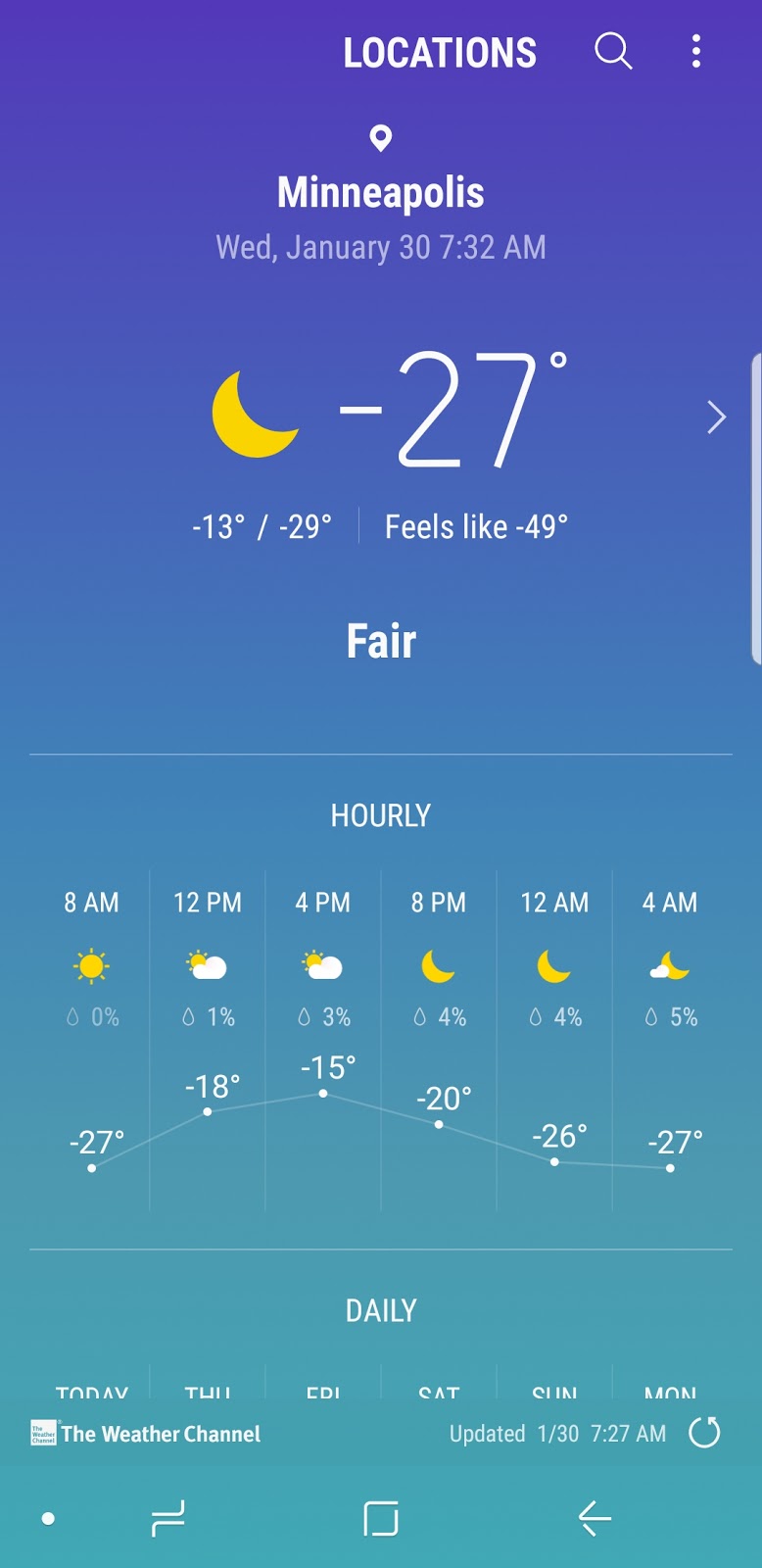
The Mule was not originally on my 'must see in the theater' radar, but a friend was in town and we were hanging out at the Mall of America, and this fell into our time window. I had heard good things from someone at work, so why not. It's based on the true story of a senior citizen, Earl Stone (Clint Eastwood who also directed), who takes up driving mysterious packages across the country to earn money. Turns out the packages contain illegal substances and his employers are members of the Mexican drug cartel. Earl has a way with people, except his family, and that helps him negotiate the learning curve of working for people who would just as soon kill you as pay you. I liked watching Earl's relationship with one 'team' of drug dealers, asking about their families, having one of the young kids teach him how to text and use a smartphone, etc. I was less thrilled with the repetition of the drives; there are subtitles that indicate that this is the fourth trip, the fifth trip, etc. etc. and I think we hit 10 trips, and I was ready to go. There is a fractured relationship between Earl and his daughter (played by his real life daughter, Alison Eastwood) that doesn't get completely healed until the end (and maybe not even then). Bradley Cooper is a DEA agent on the trail of this new 'mule'; Dianne Wiest is Earl's ex-wife, who has remained friendly, if not a little wistful because their marriage ended. It's a good movie for movie night, maybe on a night where it's -27 degrees. Just saying.


1/19/19 My Darling Clementine, 1946, National Film Registry

The only prior knowledge I had of My Darling Clementine was the episode of "M*A*S*H" where they keep trying to show the movie and the film keeps breaking. It's one of my favorite episodes. It happened to be showing on a random movie channel one weekend and I started watching, then I saw it was on my list. John Ford directed Henry Fonda (Wyatt Earp), Victor Mature (Doc Holliday) and Walter Brennan (Newman Haynes Clanton) in this Western that re-tells the story of the gunfight at the O.K. Corral (with a great deal of historical liberties). Wyatt and his brothers are moving cattle when they meet up with the Clanton family who offer to buy the cattle. The Earps aren't interested, but the Clantons don't take no for an answer. Wyatt is a laconic man, letting his actions speak for him, which sometimes means shooting people. He is restrained and somber, letting his emotions show through when he's fighting for his family or showing kindness to Clementine Carter, Doc Holliday's former amour. I am no expert on Westerns, even though I have watched more than my fair share because of the lists, but I do know what I like and don't like, and I liked and enjoyed this movie. I was glad to finally see the film in it's entirety.

1/26/19 First Man, nominated Best Sound Mixing, Best Sound Editing, Best Production Design, Best Visual Effects, 2019

First Man is about Neil Armstrong and his role in America's space program, which was in its infancy. The movie is directed by Damien Chazelle (La La Land) and stars Ryan Gosling (also recently of La La Land) as Armstrong. While the story is mainly about the space program and Armstrong's efforts to be part of a successful launch and landing on the moon, it also provides a look into Armstrong's personal life, including the death of his daughter in his early days as a test pilot. Her death haunts him, and makes him distant from his wife, his children and his fellow pilots. I think the history of the space program and the space race with the USSR is fascinating and amazing, and I think that Chazelle et al show us a glimpse of the dangers and risks, as well as the personal costs of this new field. It's nominated for Best Production Design and Best Visual Effects, and they are very well done. Out of the nominated films I have seen, I do they are better than most of the other movies, except perhaps Avengers: Infinity War.

1/26/19 Ready Player One, nominated Best Visual Effects, 2019

I don't even know what to say about this movie. A friend of mine read the book and thought the movie was terrible and not true to the book at all. I have no other frame of reference. It's a movie about gaming in a virtual reality. I thought the acting was mediocre, especially from Academy Award winner Mark Rylance (although something I read somewhere made it sound like he was acting this way on purpose). The movie was directed by Steven Spielberg. I mean, since I had to watch it because it was on the list, I had higher expectations. But, I really didn't care. I stopped paying attention, I couldn't pay attention, it was just so bad. I didn't think its visual effects were that great or original or eye catching. Maybe I have a bad attitude. The good thing is it was free from the library.

Oscar Nominations are out: Vice and Christopher Robin

Oscar nomination were just released yesterday and that might be the kick in the pants I need. There are a lot of nominations that made my eyes roll and breathe sighs of disbelief about some of the movies I would "have to watch", but also a little relief that I was in better shape that I originally thought. So, with one month to go, let's get moving.

12/28/2018 Vice, Best Picture, Best Director, Best Actor, Best Supporting Actor, Best Supporting Actress, Best Original Screenplay, Best Film Editing, Best Makeup and Hairstyling, 2018

Every time someone asks my opinion of Vice starring Christian Bale as former Vice-President Dick Cheney, I hem and haw, I pause, and then I say, I liked it, it was good, Bale was great, but I couldn't wait until it was over. I tried explaining this to my brother, who saw it with me, and I think it was because I lived through most of what the movie portrayed, and I didn't like it when it was happening, and I liked it less watching it. Adam McKay wrote and directed, and he was behind The Big Short, another movie snatched my life experience (I had mixed feelings about that film as well). The film follows history, to a degree, with commentary from an unknown narrator, showing Cheney going from a drunk to a White House intern and then moving up in the Republican machinery. Cheney's wife Lynne (Amy Adams) is portrayed to be as ruthless as Cheney himself. Sam Rockwell is George W. Bush and Steve Carell is Donald Rumsfeld. This isn't a documentary, so there is obviously some artistic license taken, but if the scenes depicting what followed after 9/11 are even close to true, it seems that Vice-President Cheney was flying pretty close to the sun, claiming privileges and powers to which he had no right. I'm pretty much on the left of the political spectrum, but even I felt like I was being hit over the head with McKay's agenda. As for all of the nominations, Christian Bale disappeared in his portrayal of Cheney, and he captured so many of Cheney's mannerisms and speech patterns, he deserved his nomination. The makeup, which really transformed Bale, is nomination worthy, for sure. The other nominations? Well, I'm not so sure.

12/31/2018 Christopher Robin, nominated Best Visual Effects, 2018

Ewan McGregor plays a grown up and uptight Christopher Robin, who has long forgotten his playmates from the Thousand Acre Wood. Of course, grown up Christopher Robin has lived through combat in World War II, getting married, having a child, and a very adult job, with stress and budgets and managers. No wonder he's miserable. Lucky for him he has friends like Winnie the Pooh, Tigger and the rest of the gang, to remind him what it's like to be whimsical and driven by your imagination instead of deadlines. Pooh and Company are animated, and Jim Cummings, who has been the voice of Pooh and Tigger for many years, makes it all so wonderfully familiar. The animation isn't the cartoon animation that we've seen in Winnie the Pooh movies, but it's like the stuffed animals have come to life. A friend mentioned to me that's why she didn't want to watch it, but I didn't mind it, I actually enjoyed it. The movie has some of the familiar songs, including "The Wonderful Thing About Tiggers", plus a few new ones. I watched the movie because clearly I had nothing going on New Year's Eve, but also, someone told me they really liked it. Who knew it would be nominated? I would be surprised if it won considering some of the other nominees, including Avengers: Infinity War

2018 potential nominees: Crazy Rich Asians, The Favourite, Bohemian Rhapsody

12/8/18 Crazy Rich Asians not yet nominated, 2018

I realize I may be alone in this, but I really hated this movie. I'm sorry, I thought most of the acting, with the exception of Michelle Yeoh (Crouching Tiger, Hidden Dragon) and Constance Wu (Fresh Off the Boat), was horrible, ridiculously exaggerated. I totally understand and get that it was a big deal for a major motion picture to have a totally Asian cast and be a huge hit; I won't downplay the importance of that, however, I don't think the movie itself was worthy of all the praise heaped on it. It was lavishly designed, and I wouldn't be surprised if it received several nominations for production and art design. The story, of a man and woman in love but from two different worlds, is really not a new one; in fact, you could substitute several different ethnicities, and have a similar story. I enjoyed the soundtrack, and I liked Awkwafina's performance, which was over the top, but it fit the character and the cartoony nature worked. There were several times I wanted to poke my eyes out or at least take a nap, but I thought I should really stick with it. Ugh, just ugh.

12/15/18 The Favourite, not yet nominated 2018

Sadly, I paid full price for this 'gem' in a theater, happy birthday to me. The best thing was I was with a pal and so I didn't suffer alone. I had zero idea what the film was about before we went to see it, just that it was loved by the critics and had a lot of potential for Oscar nominations. That was all I needed to say yes when my friend wanted to see it (yes, totally blaming someone else). What a pretentious piece of shit. Directed (although not written) by Yorgos Lanthimos (writer and director of The Lobster and another awful movie, loved by the critics, Dogtooth). The movie is about the Queen Anne period in English history, and I'm not talking about the furniture. It's a time that isn't often covered in movies, which often feature Queen Elizabeth I or II, Henry VIII, Queen Victoria, and maybe the Georgian period. It's really about the relationship between Queen Anne (Olivia Colman), her 'favourite' the Duchess of Marlborough, Sarah Churchill (Rachel Weisz) and Sarah's rival, Abigail Hill (Emma Stone). The performances are wonderful and strong; the women are portrayed as smart, conniving, survivalist and independent (although in the case of Queen Anne it may not seem that way). It was nice to see a movie star three strong female characters, and while there were a couple of male characters with significant dialog (Nicholas Hoult as Robert Harley and Joe Alwyn as Samuel Masham), they really served the female leads. There are some historical facts in the movie, but I hope people don't use it as a history lesson. Queen Anne is most often shown as being whiny, childish, demanding and a little on the unstable side. We are given to understand one of the reasons for this is because she has had 17 children who have all died. The Duchess of Marlborough and the Queen have been friends for years, and it seems that the Duchess may be taking advantage of that relationship, and when Queen Anne, in a moment of pique/spite/sanity chooses to elevate Abigail Hill to a higher position in her household, creating jealousy between the two women. It's categorized as a comedy-drama, but I didn't think there was that much comedy, at least not the type of comedy I like or find funny. There are some beautiful costumes and sets, so there may be some nominations there, as well as for one or more of the performances. The classical music of the period was lovely, I love a little Bach, but the more modern components made me consider sticking a sharp object in my ear. If you feel you need to see potential Oscar nominees, then you probably need to see this, otherwise, honestly, spare yourself.

12/16/18 Bohemian Rhapsody, not yet nominated 2018

I was so afraid that I missed Bohemian Rhapsody in the theater and someone told me that you really have to hear it with the big screen sound, so I was thrilled to find out it was still playing at my neighborhood theater. Bohemian Rhapsody tells a story of the band Queen and its charismatic front man, Freddie Mercury. I'm not going to go into all of the controversy around the telling of their origin story, Mercury's struggle with his sexuality, his fight with AIDS, or the casting decision to dump Sacha Baron Cohen (or did he dump them) in favor of Rami Malek as Mercury. You never get the full story, even when (or especially when) the subjects are involved in the project, and I don't know if anyone would have been happy with a gritty, dark look at the band. I was so happy with the movie (especially after that horror show from the day before), singing (in my head) along to the songs, and crying (ugh, yes) at the scenes from Live Aid and the end. For younger people, like my brother, this is 'history', for me, it was part of my life: playing "We Are the Champions" in the fourth grade; trying to figure out why I liked "Another One Bites the Dust" even though I tried not to; reading stories or hearing rumors about Mercury's sexuality (especially after some of the leather outfits he was wearing); and watching Queen's electric Live Aid performance as it happened; and listening to Queen's last studio album and learning that Mercury was dying of AIDS. These weren't things my mother told me about, or I watched in some retrospective, it was my era (as my brother said). Anyway, sorry about the diversion into Nostalgia Alley. Rami Malek is spot on as Mercury, and actually most of 'the band' is on target, I only had a real problem with Ben Hardy as Roger Taylor, but I can't quite put my finger on why, I think it was the hair; just bad. Gwilym Lee as guitarist extraordinaire, Brian May and Joe Mazzello as bassist (and resident funk fan) John Deacon also seemed to hit the mark. The band had fifteen albums and it seems the film barely scratches the surface in that regard. The movie portrays the long term romantic relationship turned friendship between Mary Austin and Mercury, how accurate that portrayal is, I don't know, but it was very important to Freddie and the story. The movie traces the origins of the band and very quickly moves through key moments, like creating the song "Bohemian Rhapsody" and different tours (I will say, those moments seemed like the lamest cinematically, the sets for the 'concerts' looked cheap and half assed) to internal conflicts which always seem to get resolved, like a family resolves its quarrels, to Freddie's split from the band and their reunion for Live Aid, and Freddie telling the band he had AIDS. Essentially the film packs in twenty years of history and anthemic songs into a little over two hours, and I think it does it in an amazing and powerful way. Normally, as you may recall, if a movie goes over two hours, I'm usually getting antsy by the 90 minute mark, but in this instance, I could have sat there for another hour. There was a bit of sadness (or there was for me), but also something uplifting about the movie and reconnecting with that music; so much so that I will be seeing Queen with Adam Lambert in St. Paul in August. I don't think the score or soundtrack can be nominated for an Oscar, but hopefully sound mixing/editing, maybe production or hair and makeup and costume, and perhaps even a Best Actor for Malek. 

Moulin Rouge times two and Bette Davis in Dark Victory

11/10/18 Dark Victory, 1939
I've been reading a lot of biographies lately of actors, and recently I finished Ed Sikov's book Dark Victory: The Life of Bette Davis, and became interested in seeing Dark Victory. Davis was nominated Best Actress for her role as Judith Traherne, but lost to Vivien Leigh in a small film called Gone with the Wind. Judith is a spirited socialite who begins to get mysterious headaches. The headaches are diagnosed as something much more serious by Dr. Frederick Steele (George Brent). Despite surgery, Judith is getting worse, but Dr. Steele, who later becomes Judith's husband, and her best friend Ann (Geraldine Fitzgerald) decide to keep the news from Judith. Bette Davis had a big personality and so does Judith Traherne who is determined to live as full a life as she can, until she can't any longer. I read about the movie in the biography, so I wasn't surprised by the ending, but I paid a lot of attention, and was really moved by Davis's performance. Even when Davis is over the top, it's hard not to watch, you want to see what she'll do or say. Dark Victory was very good, Davis was at the top of her game, Humphrey Bogart, as Michael O'Leary, has a terrible Irish accent. I wouldn't recommend this as a holiday film, it's a bit of a downer, but perhaps something for the winter nights ahead. (I can't even say I can cross this off a list :( ).


12/1/18 Moulin Rouge, Best Art Direction, Best Costume Design, 1952

Jose Ferrer stars as Henri de Toulouse-Latrec in this gorgeous film written and directed by John Huston. The opening fifteen minutes of Moulin Rouge are some of the most colorful I've seen. Eye popping. Moulin Rouge is set in 1890s  and early 1900s Paris and centers on Toulouse-Latrec and his melancholy life of one-sided love affairs with prostitutes, a disappointed father and the life long affects of a childhood accident that stunted his growth. Ferrer does double duty as Latrec and his father, and in the days before CGI, Ferrer came up with some unique ways to portray the short painter. Latrec painted scenes of Paris and Parisian life in the cafes and nightclubs and Huston brings them to life. If you're looking for an art history lesson on the Post-Impressionists told through cinema, double this up with Lust for Life about Vincent Van Gogh (Kirk Douglas).


12/1/18 Moulin Rouge!, Best Art Direction, Best Costume Design, 2001

I didn't realize until I just typed it out that both Moulin Rouge films were nominated for many Oscars, but only won two, and they won the same two awards. That might be a coincidence, but it was no coincidence that I watched (re-watched) both movies on the same day; they were actually packaged together from the library. Serendipity. There is no doubt that the Baz Luhrman-directed film is full of bombastic color and extraordinary costumes and sets, or that I did, in spite of myself, enjoy the soundtrack, but other than that, meh. I understand I am probably in the minority, but I really didn't like the film as a whole, in fact, I vaguely recall falling asleep the first time I watched it. Style above substance works for me in short bursts, but two hours was too much (it felt a lot longer). This version of Moulin Rouge does have a place for Toulouse-Latrec (this time played by John Leguizamo), but focuses on struggling writer, Christian (Ewan McGregor) and his love affair with the lovely, but doomed, Satine (Nicole Kidman), and the motley crew that surround them. I am so disinterested, which is probably why it took two weeks to write this crap of a review. I'll do better.

Long time gone, but I'm back - Bette Davis, Errol Flynn, Henry Fonda, Sandra Bullock and Cate Blanchett

It's been a while. Writer's block sucks. This is going to be quick and dirty, and I hope to get back on track.

6/20/18 Now, Voyager, Best Music, Scoring of a Dramatic or Comedy Picture, 1942

Bette Davis stars as the ugly duckling turned swan, Charlotte Vale, in this film that also features Claude Rains and Paul Heinreid. Charlotte is dominated by her mother and matriarch of the Vale family (Gladys Cooper); she is bullied so much so that she is sent to a sanitarium under the treatment of Dr. Jaquith (Claude Rains). Charlotte blossoms and discovers her own personality and strength. Davis was nominated for Best Actress, but Greer Garson won for her role as Kay Miniver in Mrs. Miniver; Katharine Hepburn was nominated as Tess Harding in Woman of the Year, and Joan Fontaine in Rebecca as The Second Mrs. DeWinter. I enjoyed the film and watching Charlotte's transformation. There was something about the film that seemed relevant today, over seventy five years later.

6/21/18 The Adventures of Robin Hood, Best Art Direction, Best Film Editing, Best Original Score, 1938

The Adventures of Robin Hood is a fun movie; Errol Flynn seems to be enjoying his role as Robin Hood, teasing and basically giving Prince John (Claude Rains) and Sir Guy of Gisbourne (Basil Rathbone) a very hard time until King Richard returns to England from the Crusades. The movie has swashbuckling action, humor, a love story featuring Maid Marian (Olivia de Havilland) and Robin, and an Oscar-winning score. The fabulous Technicolor is still eye-popping (even on my twenty year old television), I can't imagine what it was like on a big screen when most films were still in black and white (Now Voyager was released four years after this was in black and white). If you're looking for a fun movie for a weekend at the cabin, I would recommend this one.

6/23/18 One Survivor Remembers, Best Documentary Short, National Film Registry, 1995

As we lose Holocaust survivors to age, it becomes more and more important to remember their stories and what those stories mean to us, especially in the upside down world we're living in these days. Survivor Gerda Weissmann Klein narrates her story and the story of her family, who perished in the camps. Her experience is one of destruction and death, but also resilience, strength and love. The film is available on YouTube (and hopefully in the link below) and her acceptance speech at the Academy Awards show is included and it is well worth watching.


6/23/18 The Anderson Platoon, Best Documentary Feature, 1967

In the 21st century, with the 24-hour news cycles and smartphone videos coming from every corner of the world, it may be hard to imagine a time when it wasn't quite as common for a film crew to be embedded with a platoon that is in combat. French director Pierre Schoendoerffer was with the American 1st Cavalry Division in South Vietnam, specifically a platoon led by West Point graduate, Lieutenant Joseph Anderson. The film takes us into the jungle and combat, we also get brief biographies on the soldiers, and updates on injuries and mortalities. The Vietnam War was controversial and divisive, but the film really focuses on the soldiers, the young men, barely into their twenties, who are far from home, and trying to survive.


6/30/18 The Bad and the Beautiful, Best Supporting Actress, Best Art Direction (B&W), Best Cinematography (B&W), Best Costume Design (B&W), Best Writing, Adapted Screenplay, National Film Registry, 1952

I feel like I should have loved this movie, but I didn't. It was fine, I liked it, but it seemed derivative, a lot of Citizen Kane and a little bit of Ace in the Hole (also starring Kirk Douglas). Douglas is Jonathan Shields, a producer/studio head, who has no qualms about using people to advance his career, even if it hurts others. Three of these 'others' are gathered together, and in flashbacks, we learn how Shields cheated, betrayed or hurt them. Gloria Grahame won the Best Supporting Actress for her role as the Southern belle wife of one of the people that Shields hurt; she was on screen for less than twenty five minutes, and I personally think it should have gone to Jean Hagen as Lina Lamont in Singin' in the Rain. Watching the film was timely because a few weeks earlier I watched Film Stars Don't Die in Liverpool, starring Annette Bening as Grahame. I think your life will continue on if you don't watch this, but if you do watch it, I don't think it's the worst thing in the world, either.

6/30/18 Ocean's 8, not yet nominated 2018

I don't have any great analysis on Ocean's 8 starring Sandra Bullock, Cate Blanchett, Anne Hathaway and a cast of very talented actresses. It was a fun, smart, fast paced eist movie, along the lines of the other "Ocean's" movies. I would actually watch it again, which I don't say very often about any movie. Will it be nominated? Very possibly not, but I don't care. It's probably going to be out on video/streaming soon, and it would be great for a movie night (pretty much for the whole family). 

7/8/18 Jezebel, Best Actress, Best Supporting Actress, National Film Registry, 1938

It took me a while to get into Jezebel, starring Bette Davis as spoiled Southern belle Julie Marsden. I don't know, perhaps I was distracted. It was really towards the end that I appreciated what the movie was about. It also stars Henry Fonda as Julie's frustrated beau. It is 1850s New Orleans and Julie is headstrong and not afraid to defy conventions, and while that may be admired today, it causes her and her family embarrassment. Watching Davis in Now, Voyager and then Jezebel, you can see her range and why she is considered such a great actress; two very different characters, although they are united by their ultimate strength. It's not a movie to watch if you're looking for laughs or an escape from the world, but it is worth watching.

7/8/18 Dodsworth, Best Art Direction, National Film Registry, 1936

I had never heard of Dodsworth before, and I hadn't read anything about it before I watched it, so I had no idea what it was about. I would consider it a pleasant surprise. William Wyler directed Walter Huston, Ruth Chatterton and Mary Astor in this look at marriage in the first half of the twentieth century. In some ways, it takes a very common occurrence, the husband (Huston as Sam Dodsworth) retires and decides he wants to do all those things he and his wife (Chatterton as Fran Dodsworth) didn't have time for, and then they both find out (although Fran might have known all along) that they don't necessarily want the same things, and Fran is a little freer in finding other companions. I was rooting for Sam all the way, even as he struck up a friendship with Edith Cortright (Mary Astor) and found his bliss in Italy. I truly was not certain how the movie would end, and I'm not going to tell you, but if you want to try a movie off the beaten path (have you ever heard of Dodsworth?) pick it up from the library or Netflix.

Oscar Winning Documentaries - From Mao to Mozart, Defending Our Lives and The Panama Deception

If you've been here before, you probably already know how much I love documentaries: short, long, foreign language, English, serious, funny, it doesn't matter. It takes a lot to make me not like a documentary. Below are reviews of three older documentaries, one short and two features, and I recommend all three of them.

5/4/18 From Mao to Mozart, Best Documentary Feature, 1979

I feel like I have some vague recollection of when From Mao to Mozart came out because I had a friend whose family was really into classical music, and it seems like something he would have seen and told me about (of course, I could be wrong). Anyway, childhood memories aside, I watched this documentary featuring virtuoso violinist, Isaac Stern as he makes a groundbreaking visit to China in 1979. China was still pretty closed off to Americans at the time and not much was known about it just a few years after the end of the Cultural Revolution. Stern, who died in 2001, is a wonderful guide because he has such a great spirit of curiosity about the people, the culture, the music, but also an irrepressible way of sharing his decades of experience with anyone who cares to listen, and in many instances, it is hundreds of people, old, young, all eager to learn from him. He encourages his 'students' to feel the music, not just be technically correct. Stern also meets teachers at a music school who were imprisoned during the Cultural Revolution, a dark time in modern Chinese history, where Western influences and anyone sharing them would be tortured, starved, locked away for years. Thirty years is a long time ago, and perhaps this may seem dated to some, but I think it's an eye opening film into what it was like in China, and if nothing else, it gave me more exposure to Isaac Stern, and I am now reading his memoir, My First 79 Years.

5/5/18 Defending Our Lives, Best Documentary Short, 1993

Whereas From Mao to Mozart may seem dated and so far removed from what we know of China today, Defending Our Lives is still frighteningly relevant. I think this should be required viewing in high schools and college campuses, and police academies (there are two fairly recent Oscar-nominated documentaries that are about sexual assault, The Invisible War and The Hunting Ground). Actually, everyone should watch it. The movie opens with Sarah Buel, Assistant District Attorney of the Domestic Violence Unit in Suffolk County, Massachusetts. You don't know this information for a while as she recites facts about abuse against a slideshow of photographs; you might think the violent statistics are from a war torn country or a less developed country. That would not be the case. It's right here in America. Buel was also a victim of domestic abuse and like the other women in the film, bravely tells the story of repeated abuse and repeated ignorance from the authorities. That's one the central themes: women who were repeatedly threatened and abused, but also tried to leave, sometimes moving to new states, but their abusers were NEVER stopped by the police. They paint a vivid picture of wanting to leave, but you're scared for your kids, for yourself, and then finally getting the courage to leave. And in the cases presented here, the women took their lives into their own hands and kill their abusers in self-defense. They asked, begged, for help, and were turned away. They ask why society turned its back on them and in some cases, their children; the deaths could have been prevented if the men had been jailed. There is some justice in the film, and the strength that these women show in telling their stories and trying to use it for good is powerful.

5/12/18 The Panama Deception, Best Documentary Feature, 1992

I don't intend to get angry when I watch a documentary, but it happens sometimes, and there's usually a good reason, as is laid out in The Panama Deception. This documentary from 1992 focuses on the invasion of Panama, ostensibly to defend the Panama Canal, but turned into a brutal use of force and puts American imperialism on full display. The film provides historical context for America's relationship with Panama, which doesn't seem all that different from the country's relationships with other Latin American countries (or other countries, period), which is to say pretty one-sided and often violent with a tinge of paternalism. It lays the background for the Iran-Contra Affair (for those of you who think of Oliver North only as the newest president of the NRA. The film includes interviews of reporters, political scientists and political/governmental representatives with voice over narration by the late actress, Elizabeth Montgomery. News clips show then President George H.W. Bush justifying his actions as necessary for the defense of the United States, but critics claim it was a way to combat his reputation as a wimp. Bush's Secretary of Defense was none other than Dick Cheney, who later served as Vice President under George W. Bush and was a strong supporter of the invasions of Iraq and Afghanistan. Ramsey Clark, former US Attorney General under President Johnson, suggested that what happened in Panama should be considered a war crime, and many others agreed. This is a sad episode in US-international relations, but one that is very rarely talked about these days; perhaps because there have been so many other sad episodes in the past twenty-five years. The documentary is available on YouTube.


More nominated films Logan, Marshall, The Post, Victoria and Abdul

A few comments since the nominations came out on Tuesday. First, I have a lot of work to do ('work' probably isn't the right word, so let's just say, I'm behind the eight ball). There were some surprises for me: not more nominations for The Disaster Artist (does Hollywood not find The Room amusing?); no nominations for Murder on the Orient Express, when I thought it had better cinematography, sets and costumes than Victoria and Abdul; SHOCKED that Wonder Woman didn't any nominations, not for director, not for editing, nothing (okay, maybe I shouldn't be shocked, but it was a kick ass movie); I had hoped for more nominations for The Greatest Showman. Second, I feel like I should have a little footnote for the next several posts because my movie attendance has been sponsored by some great friends who bought me a three month Movie Pass, which lets me see one movie a day (if I actually could) for free at dozens of theaters. Such a great idea.

6/15/17 Logan, nominated Best Adapted Screenplay, 2017

I write this knowing full well that I may be in the minority, but I'll get over it. I was so excited to see Hugh Jackman as Wolverine in Logan, but then I heard it was heavy, and serious and so dramatic, and over two hours, I couldn't drag myself to the theater. I watched on the flight from New York to Barcelona (as one does) and it felt like the movie was longer than the flight, and I don't mean that it a good way. I fell asleep at one point. Wolverine is losing his powers, Professor X is fading fast and they're being hunted. There's a girl who has powers similar to Wolverine. Blah blah. I don't really know much else, except it was too long.

1/20/18 Marshall, Nominated Best Original Song, 2017

We need Thurgood Marshall as much today as back in the 1950s and 1960s. Marshall looks at one of Marshall's cases, when he was working for the NAACP, that was taking place in Connecticut. It might not have been as overtly racist as Mississippi, but there was definitely racism and anti-Semitism in the Northeast. Chadwick Boseman ( who also played Jackie Robinson and Black Panther) is Marshall, and is boisterous and brash and very confident, which is a little overwhelming for Sam Friedman (Josh Gad), the Jewish attorney who is 'sponsoring' Marshall (I think because Marshall was not licensed to practice in Connecticut) as well as for the judge (James Cromwell). They are representing Joseph Spell (Sterling K. Brown, "This is Us") who is accused of raping and attempting to kill a white woman. Marshall and Friedman come to an uneasy peace and try to figure out what Spell isn't telling them and how to get it across to a jury. It is not easy to see how this is going to turn out. The movie is good and hopefully inspired and/or educated people (it was released in the autumn, which is prime time for teachers to assign it for a class), but I didn't feel as inspired as when I watched Hidden Numbers or 42 or Selma. I think it's tough when you do a movie based on a real person or real events; there are certain expectations that an audience has. And something was missing for me; nothing to prevent me from recommending it, but I wanted more. It was nominated for Best Original Song "Stand Up For Something" and it is very good and did give me goosebumps.

1/21/18 The Post, Nominated for Best Picture, Best Actress, 2017

I'm struggling with my feelings about The Post; I liked it, especially the last 25 minutes, but I really wanted to love it. The story that director Steven Spielberg tells about The Washington Post's publication of the Pentagon Papers, after The New York Times was served with an injunction to prevent them from publishing any more, is an undeniable example of freedom of the press, something under attack by the current administration. The movie tells two stories, really, one is of Katharine Graham (Meryl Streep) running The Post, a rare role for a woman in the 1970s, and her struggle to make her voice heard amongst her many male advisors; and then the story of publishing the Pentagon Papers. Daniel Ellsberg made copies of The Pentagon Papers which were classified reports on America's involvement in the Vietnam War, unfavorable reports. Ellsberg gave much of the documentation to The New York Times, but turned to The Post after the injunction. Editor Ben Bradlee (Tom Hanks) is looking for a story and is anxious to get his hands on whatever The Times was working on. Something about the pacing of the movie bothered, maybe it was the way it bounced between Graham's personal life, life at the paper and the newsroom; it seemed uneven. The cast includes names you'll recognize, even if you don't recognize the actors under the makeup: Sarah Paulson, Bradley Whitford, Tracy Letts, Bruce Greenwood, David Cross and my favorite, Michael Stuhlbarg. I loved watching the process of writing, editing, setting the type, and then hitting the button for the massive machines to start printing. They don't do it like that anymore. There is the inevitable link to Watergate, and you can't help but make the connection between this and All The President's Men. The Post is an important and good film, a good history lesson, but I don't think it's the Best Picture, and I don't think Meryl Streep will win Best Actress. 


1/21/18 Victoria and Abdul, Nominated Best Makeup and Hairstyling, Best Costume Design, 2017

Alas, here is another movie that is good and pretty to watch, but not great. It's being called a 'sequel' to Mrs. Brown, which also starred Judi Dench as Queen Victoria and another man, not her husband, who threatened the Royal Household. In this case, many years later, the man is Abdul (Ali Fazal), a Muslim Indian, who is brought to England as part of Victoria's Jubilee. He charms her, and she gives him more access, and asks him to teach her Urdu and the Qu'ran. It's not hard to imagine that this did not sit well with her family or advisors, including the Prince of Wales (Eddie Izzard) and her physician, Dr. Reid, who was very obstructionist. There were times that I felt the family/retinue were clownish exaggerations. Abdul's place in the Queen's retinue was hidden from history until recently when Abdul's papers were discovered, and I was interested in that. Judi Dench is wonderful, I mean, when isn't she? You can watch this on the small screen.

Whiling away the time while staying at home

There is no denying that these are very strange and tumultuous we're living in. Obviously I haven't been blogging too much lately, i...