Showing posts with label westerns. Show all posts

Movie watching in a winter wonderland The Mule, Ready Player One, First Man


1/12/19 The Mule, 2019

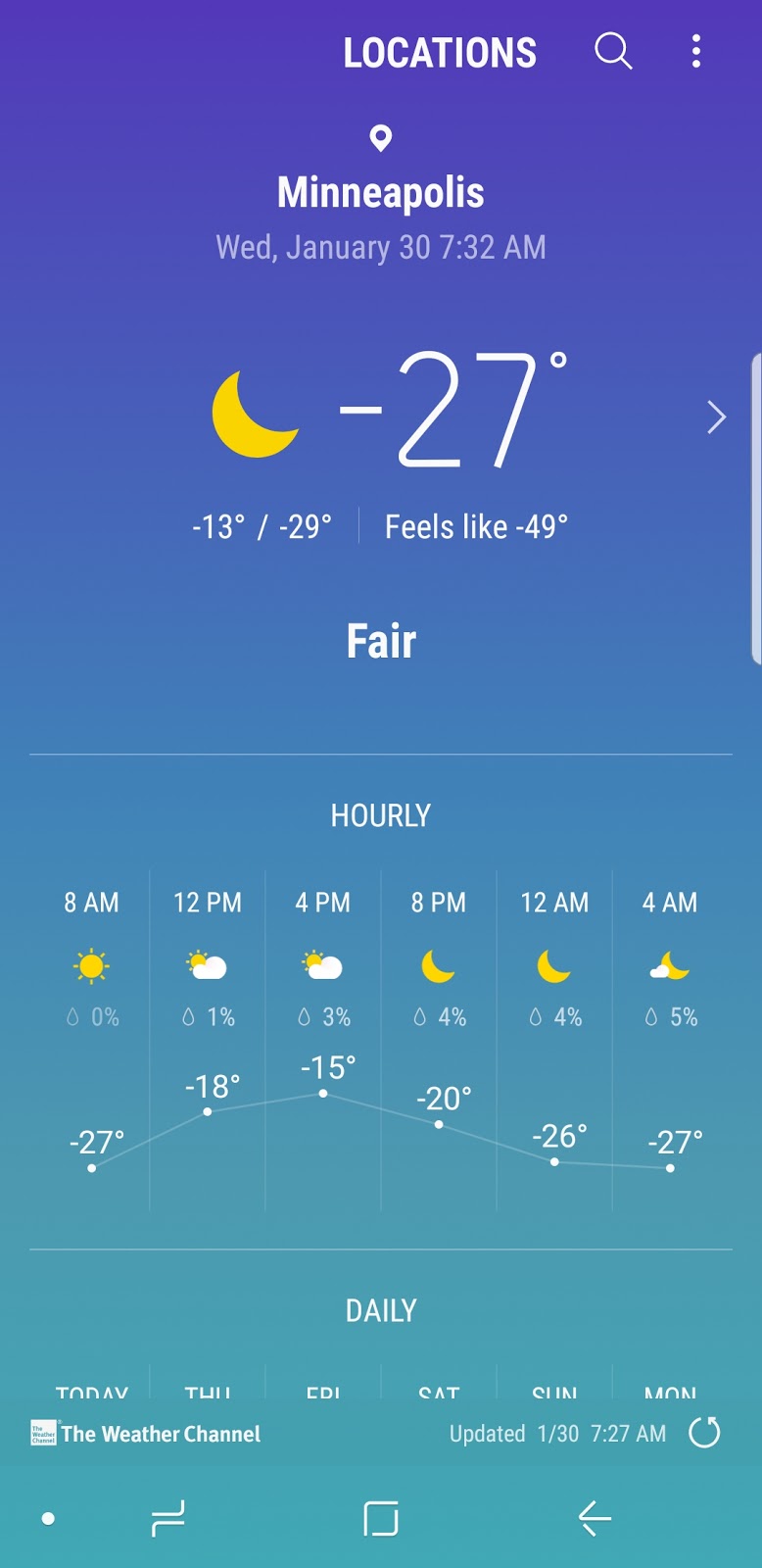
The Mule was not originally on my 'must see in the theater' radar, but a friend was in town and we were hanging out at the Mall of America, and this fell into our time window. I had heard good things from someone at work, so why not. It's based on the true story of a senior citizen, Earl Stone (Clint Eastwood who also directed), who takes up driving mysterious packages across the country to earn money. Turns out the packages contain illegal substances and his employers are members of the Mexican drug cartel. Earl has a way with people, except his family, and that helps him negotiate the learning curve of working for people who would just as soon kill you as pay you. I liked watching Earl's relationship with one 'team' of drug dealers, asking about their families, having one of the young kids teach him how to text and use a smartphone, etc. I was less thrilled with the repetition of the drives; there are subtitles that indicate that this is the fourth trip, the fifth trip, etc. etc. and I think we hit 10 trips, and I was ready to go. There is a fractured relationship between Earl and his daughter (played by his real life daughter, Alison Eastwood) that doesn't get completely healed until the end (and maybe not even then). Bradley Cooper is a DEA agent on the trail of this new 'mule'; Dianne Wiest is Earl's ex-wife, who has remained friendly, if not a little wistful because their marriage ended. It's a good movie for movie night, maybe on a night where it's -27 degrees. Just saying.


1/19/19 My Darling Clementine, 1946, National Film Registry

The only prior knowledge I had of My Darling Clementine was the episode of "M*A*S*H" where they keep trying to show the movie and the film keeps breaking. It's one of my favorite episodes. It happened to be showing on a random movie channel one weekend and I started watching, then I saw it was on my list. John Ford directed Henry Fonda (Wyatt Earp), Victor Mature (Doc Holliday) and Walter Brennan (Newman Haynes Clanton) in this Western that re-tells the story of the gunfight at the O.K. Corral (with a great deal of historical liberties). Wyatt and his brothers are moving cattle when they meet up with the Clanton family who offer to buy the cattle. The Earps aren't interested, but the Clantons don't take no for an answer. Wyatt is a laconic man, letting his actions speak for him, which sometimes means shooting people. He is restrained and somber, letting his emotions show through when he's fighting for his family or showing kindness to Clementine Carter, Doc Holliday's former amour. I am no expert on Westerns, even though I have watched more than my fair share because of the lists, but I do know what I like and don't like, and I liked and enjoyed this movie. I was glad to finally see the film in it's entirety.

1/26/19 First Man, nominated Best Sound Mixing, Best Sound Editing, Best Production Design, Best Visual Effects, 2019

First Man is about Neil Armstrong and his role in America's space program, which was in its infancy. The movie is directed by Damien Chazelle (La La Land) and stars Ryan Gosling (also recently of La La Land) as Armstrong. While the story is mainly about the space program and Armstrong's efforts to be part of a successful launch and landing on the moon, it also provides a look into Armstrong's personal life, including the death of his daughter in his early days as a test pilot. Her death haunts him, and makes him distant from his wife, his children and his fellow pilots. I think the history of the space program and the space race with the USSR is fascinating and amazing, and I think that Chazelle et al show us a glimpse of the dangers and risks, as well as the personal costs of this new field. It's nominated for Best Production Design and Best Visual Effects, and they are very well done. Out of the nominated films I have seen, I do they are better than most of the other movies, except perhaps Avengers: Infinity War.

1/26/19 Ready Player One, nominated Best Visual Effects, 2019
I don't even know what to say about this movie. A friend of mine read the book and thought the movie was terrible and not true to the book at all. I have no other frame of reference. It's a movie about gaming in a virtual reality. I thought the acting was mediocre, especially from Academy Award winner Mark Rylance (although something I read somewhere made it sound like he was acting this way on purpose). The movie was directed by Steven Spielberg. I mean, since I had to watch it because it was on the list, I had higher expectations. But, I really didn't care. I stopped paying attention, I couldn't pay attention, it was just so bad. I didn't think its visual effects were that great or original or eye catching. Maybe I have a bad attitude. The good thing is it was free from the library.

The BBC list with 25th Hour & Red River, and two more nominees from 2016: Land of Mine, Silence

6/3/17 25th Hour, 2002, #94 BBC

If you've read recent entries here, you know that my relationship with the BBC 100 list is very hot and cold, sometimes it's downright confounding. That's probably the reason I'm always so pleasantly surprised when I like or really enjoy a movie from it. 25th Hour was directed by Spike Lee and stars Edward Norton as Monty Brogan, a young drug dealer on his way to prison; Barry Pepper and Philip Seymour Hoffman as his two best friends Frank and Jake; Rosario Dawson is his girlfriend, Naturelle; and Brian Cox is his dad. Most of the movie follows Monty as he spends his last day of freedom, hanging out with his friends and his girlfriend, settling up with Russian mob that financed his drug business, and re-thinking his life. It's not a big ideas or big statement movie, it just tells a story, and Norton is understated, in a wonderfully engaging way. I don't normally pull for the drug dealer to come out on top, but I was really hoping Monty would make it out of prison okay. He shows his soft side early in the movie when he rescues a dog that is near death, and then takes him home. Maybe Doyle (the dog) is the beginning of Monty's redemption (I don't know, just thinking out loud). Monty is definitely not your stereotypical drug dealer, that's for sure. The movie is set in New York City and the shadow of 9/11; there are references to the first responders who died in the towers (Monty's father was a fireman); Frank's apartment overlooks the pit that was the World Trade Center; and there is a provocative inner dialog that has Monty raging against all of the immigrant/non-white groups living in New York. New York is Spike Lee's 'space' if you will, as much a character as one of the actors. The one character or storyline that didn't seem to go anywhere was with Anna Paquin as Mary D'Annunzio, who is one of Jake's students. She flirts with Jake, and he is not able to completely resist her charms. I would have liked more time on Naturelle and Monty, or Jake, Frank and Monty. There are no real 'special effects', not too much violence (it's there, but part of the story, not gratuitous), no nudity, the only sex is whatever Mary is trying to do; the emphasis is on the characters, and that is what made me want to watch this movie and care about the characters. You may not have heard about this movie before, but you have now.

6/9/17 Red River, 1948, #66 BBC, National Film Registry

Director Howard Hawks has four films on the BBC list of best American films; he probably should have had more, and his movies have won Oscars and are embedded into our collective film psyche (His Girl Friday, The Big Sleep, To Have or Have Not, Bringing Up and dozens more). So, combine Hawks with John Wayne and a host of other Hollywood names, like Montgomery Clift, Walter Brennan, and Noah Beery, you are likely to have a pretty good movie. Or an absolutely fabulous western, if you prefer. Thomas Dunson (Wayne) is a headstrong, and not entirely likeable, cattle rancher, looking to make a life out west in Texas. He's joined by his trusty cook and hand, Nadine Groot (the original) (played by Walter Brennan), and eventually a young boy, Matthew (Clift plays the older Matthew), who has lost his family in a raid. Dunson and his men build and grow a huge cattle operation, but because of the Civil War and the new laws of Reconstruction and the carpet baggers that have down from the north, the price of cattle has been driven way down. Dunson embarks on a massive cattle drive to Missouri, and it's the cattle drive that makes up most of the film. This ain't no City Slickers, that's for sure. Before the men set off, Dunson makes them sign a contract saying they won't leave the drive before it's finished (which is ironic, because that's kind of what he did in the beginning of the film), and he's very strict and tough, and there is only his way; he and Matthew, whom he has adopted, often disagree on the best way to do...everything. There is a bitter parting of the ways when Matthew and some of the other men suggest heading to Kansas instead of Missouri; but Dunson insists on Missouri and Matt and the others rebel, beating up Dunson, and heading to Abilene. It's not that they want to steal anything from Dunson, they just do not want to go his way, and are tired of his dictatorial behavior. The cattle drive took over 100 days, and a lot of things happened, like rain, and heat, and stampedes, a mutiny, and a girl. Yes, a girl. Dang it. The film opened with Dunson's love interest trying to follow him, unfortunately for her, that didn't go as planned. The other woman of the story, Tess Millay (Joanne Dru) is a dance hall girl who almost immediately falls in love with Matt, and he with her, I suppose. But, of course, he doesn't want her to follow him on the cattle drive. They do meet up again in Abilene as Matt and Dunson square off against each other, and, it seems the reason they make up is because of Tess. Honestly, that whole story line was weak and really not needed. I'm not an expert on Westerns, so I just go by if I enjoyed the movie or not. I did; it was different from the cowboys and Indians westerns, although there were Indians as part of the story, but not the whole story; there was some comedy provided mainly by Walter Brennan and the teeth he lost in a card game; this was one of Clift's very early movies, a few years before his Oscar-nominated role in A Place in the Sun; and John Wayne was mostly unlikeable, which I don't think happened that often (although, I could be wrong). I will say that the makeup, especially for Wayne was HORRIBLE; they had to age him fourteen years, so they put on a terrible hairpiece that looked so fake, it was ridiculous. The film score is magnificent, done by Dimitri Tiomkin, who did so many movie scores, but a few are Rio Bravo, High Noon, and Dial M for Murder.  I don't know exactly why this is on the BBC 100 list, but it is (I don't understand what makes it so special).

6/9/17 Silence, nominated Best Cinematography, 2016

If I didn't know that Martin Scorsese directed Silence, I don't think I would have guessed it in a million years. It is a film set in 16th century Japan focusing on a few of the Jesuit priests who went to Japan to spread Christianity, and the resistance they encountered from the Japanese rulers. It wasn't just resistance, but brutal torture and often, death, inflicted on their converts and the priests. Andrew Garfield is Portuguese padre, Sebastiao Rodrigues and Adam Driver is fellow priest, Francisco Garupe who head to Japan looking for their teacher, Cristovao Ferreira. Along the way, Rodrigues and Garupe meet many converts who are hiding and fear for their lives. They are sold out to the local samurai, and wherever they go, they bring danger to the people and themselves. These are tests of faith for both men, who had no idea or true understanding of what happened to the followers of Jesus. Rodrigues and Garupe often quarreled about the extent and depth of belief that the villagers should embrace; if they renounced Christ and stepped on an image of him, that was often enough to 'renounce' the faith, and save their lives. This would be practical, but many refused and were put to death. The two men split up to reduce the risks to the villagers and hopefully find Father Ferreira. Rodrigues is the main protagonist, and we follow him as he is captured by the chief inquisitor, and has to watch as faithful converts are murdered in front of him, and the bloodbath will continue until he commits apostasy. Father Ferreira is brought to try and convince Rodrigues to renounce his faith, to save the others. They debate the value and importance of spreading Christianity to countries like Japan. Ferreira, who committed apostasy years before, believes it's hopeless and pointless, and that there is much to learn from the Japanese. The movie is beautifully filmed, but it is brutal, there is no shying away from the varieties of torture that were used. I know there is a lot of controversy around the church, and the role of the Jesuits in converting the native inhabitants, sometimes just as forcefully. I thought it was interesting that Andrew Garfield was in another role that saw him persecuted for his faith (Oscar-nominated Hacksaw Ridge also from 2016); in this film, however, his faith was shaken and he questioned it and himself more than in Hacksaw Ridge. I liked the movie, but it took me forever to even watch it because I was so afraid of its almost three hour run time (in fact, I could have seen it in the theater, but the thought of sitting there for so long frightened me). I don't think it's one of those 'must-see' movies, but if you're the least bit interested, I say go for it.

6/10/17 Land of Mine, nominated Best Foreign Film, 2016

Land of Mine is a kick in the stomach. Even though it's set in the immediate aftermath of World War II, the message applies to the ongoing wars, and society, today. It made me think of All Quiet on the Western Front, and the senseless deaths of young men, boys, really. The movie takes place in Denmark, a country that was occupied by Germany during World War II, except after the war, Denmark was one of the victors and used young German soldiers to clear German land mines. On the one hand, you could say, good, that's what should be done, and Sergeant Rasmussen seems to agree. He is merciless and, seems to me, very cruel; but, he and his countrymen have been released from the German oppression. On the other hand, the young men in front of him are boys, maybe 18, not more than 20 years old, and they didn't plant those land mines. At some point the madness has to stop. Rasmussen doesn't flinch when the boys ask for food; he simply says no, he doesn't care if they starve or die, and tells them that. One of the boys makes the point that it would be 'better' if they died out there, clearing land mines, than from starvation; Rasmussen doesn't budge. Clearing the land mines is a dangerous business; if you're not killed outright, you could be maimed; the mines are fickle, and even when they are disarmed, they can still explode. This is a true story that has not been told, and writer/director Martin Zandvliet did his research and pulled facts together from different sources. Zandvliet shows the humanity of the young men as well as their principle jailer, Rasmussen. He keeps the viewer off balance, even when you think you know what is going to happen, it still jars you. This probably isn't at the top of anyone's list to see this summer, with so many blockbusters out there, but it's a movie that makes you think and feel, and that's more than a lot of movies can say.

This leaves one more film from 2016 to see (out of winners and nominees, The Salesman).

A hodge podge of movies: Hellboy, Queen of Katwe, The Eagle Huntress

It seemed like a good idea to watch movies and then wait a month or so to write the review...maybe 'good idea' is not the term I'm using now. Obviously, I am not going to go back and watch the 'older' movies, but I do want to review them. I will do my best to at least give you an idea if you might enjoy them or not. I have no doubt that this will not be a shining example of wit or anything else, but they can't all be winners.


3/17/17 Killer of Sheep, 1978, BBC #26, National Film Registry

Sometimes it's good for me to sit on a review and let the movie percolate in the old noggin, get some perspective. I cannot say that's the case here. Until I saw the BBC list of the best 100 American films, I had never heard of Killer of Sheep, that doesn't necessarily mean a whole lot, but I like to think I have some familiarity with movies from the past forty years, especially critically acclaimed movies. I'm not even sure I can tell you what the movie is about; it's really a collection of vignettes, set in the Watts neighborhood in Los Angeles, focusing on Stan, who works in a slaughterhouse in Watts. The movie may be noteworthy because it was made in 1978 by a black writer/director, Charles Burnett, with an all black cast, telling a story of urban living. I wish I had more insight because I feel like I'm missing something. It has been very popular on Netflix because when I was waiting for it, it was always on a long wait; I finally got it from the library. I did really like the music, which may be ironic, because that is why the film was initially delayed, the filmmakers had not secured the rights to the music. I would say that if you are a cinephile or film student, you should check out this film, but you probably have already.

3/18/17 Hellboy, 2004


I was prompted to re-watch Hellboy after visiting the Minneapolis Institute of Art's Guillermo del Toro exhibit that featured a lot of Hellboy memorabilia and artwork. Del Toro directed and Ron Perlman stars as the lovable demon, John Hurt is his adoptive father, Trevor Buttenholm. Hellboy is part of a secret team that fights supernatural creatures. I'm not sure why the franchise wasn't more successful, there was a sequel, but only one (I think), there is action, special effects, a wisecracking hero (kind of Dead Pool, Spider-Man). It was fun to watch, and while I should have been working on 'the list', it was a nice diversion.

4/6/17 The Eagle Huntress, 2016

I have been recommending this documentary to just about everyone I talk to (about movies, anyway), and I will do the same here. The Eagle Huntress is a documentary filmed in Mongolia that follows Aisholpan, a 13 year old girl who wants to follow in her father and grandfather's footsteps as an eagle hunter. This requires that she captures her own eagle from a nest in the mountains, a bit risky. Aisholpan has an indomitable spirit and disregards any discussion from men (other than her father) that she cannot and should not be allowed to participate in eagle hunting or the annual competition. She's also still just 13, and enjoys being with her friends at school and wearing nail polish and ribbons in her hair. I loved so much about this film: the scenery was breathtaking, so breathtaking that I started researching holidays in Mongolia and Kazakhstan; the relationship between Aisholpan and her father is heartwarming, he never discourages her and doesn't succumb to the pressure of the other men, and he is openly proud of her; Aisholpan is charming and determined and a wonderful role model for young girls everywhere. Even though the film is subtitled, the action is pretty self-explanatory, but there is also narration by Daisy Ridley (Star Wars: The Force Awakens) which fills in the blanks quite nicely. If you'd like to introduce your kids to a) foreign films b) documentaries and c) a different culture, this is a wonderful movie to watch.

4/7/17 McCabe and Mrs. Miller, 1971 #16 BBC, National Film Registry

I don't know why, but I thought McCabe and Mrs. Miller was a John Wayne movie; to say that was incorrect is a huge understatement. It was directed by Robert Altman and stars Warren Beatty and Julie Christie. It is set in the West, and it has miners instead of farmers or ranchers, and a saloon. Beatty is John McCabe, a gambler with is eyes set on building an empire, with a brothel as its foundation; Julie Christie is Constance Miller, a Cockney woman of ill-repute. I have seen Julie Christie in a few films, and I thought her cockney accent was extremely distracting, and I didn't believe her in this role at all. This is another film that I don't get why it's on the best of lists. It may be me, I don't know. McCabe and Miller are successful running their brothel, but McCabe gets too big for his britches when he refuses an offer to sell his business to a ruthless mine owner, and that bodes ill for McCabe. I have found my like/dislike for Warren Beatty is hit or miss, and this is somewhere in between. There you go, my lukewarm review. Take it for what it's worth.

4/8/17 Queen of Katwe, 2016

The Disney film Queen of Katwe is based on the true story of Phiona (Madina Nalwanga), a young girl living with her family in the slums of Kampala, Uganda. Phiona and her family struggle to survive selling vegetables, trying to keep a roof over their heads, when one day Phiona walks into a center where children are playing chess. She doesn't know much about the game, but quickly and intuitively, she begins to learn, getting encouragement from Robert Katende (David Oyewolo) who runs the missionary program sponsoring the chess program. Phiona's mother (Lupita Nyong'o) doesn't like that the chess distracts Phiona and her younger brother, Brian, from supporting the family, but she doesn't realize that chess may also open doors for the children to education and a better life. The movie isn't a cliff hanger, there are no special effects or stunts, and you might think that watching a chess match is about exciting as watching paint dry, and in this instance, you would be mistaken. The matches are edited to highlight the drama and the tension, and I think it works. The movie is about Phiona's development into a competitive chess player as well as a young woman, challenged by her circumstances and, at times, her ego. Phiona is the focus, but we learn about her family, and the hardships they face, and the things we take for granted. Her brother, Brian, is a spitfire and a good chess player; her sister, Night, is rebellious and chafes under her mother's strict rules. This is another good choice for your family movie night, maybe start with this and then The Eagle Huntress; take your family on a journey to Africa, encourage your daughters to be anything they want, and that they are as smart as the boys.


The latest Star Trek, a Joan Crawford Western and an inspiring documentary short

12/10/16 Star Trek Beyond, not yet nominated 2016

Every time a new Star Trek movie comes out (specifically the last iteration), I feel a sense of dread. I can't help it, especially because I know it will probably be nominated for an Oscar and I'll have to watch it anyway. And, I suppose the thing is, that the movies really aren't that terrible, in fact, I usually end up enjoying them. That's what happened with Star Trek Beyond. I enjoy the banter, sarcasm and jokes between the crew, especially Dr. McCoy and Spock, as well as some pretty great special effects. We get a look at Starbase Yorktown (I don't think that has been shown in other films), because the crew of the USS Enterprise is on leave. The Enterprise and crew take off to help rescue a ship that is caught in a nebula. It's probably not giving away too much to say it's a trap! (you were shocked, right?). Idris Elba is the 'villain' Krall/Captain Bathalzar Edison, the former commander of the USS Franklin who has mutated. He and Kirk (Chris Pine) have a pretty intense battle towards the end of the movie. Since the movie just came out on DVD, I don't really want to give away too much about the different plot points (well, except that the rescue of the ship in the nebula was a trap, but that was obvious). When I watch Star Trek movies, I don't look for a sophisticated themes or meanings, I just want a fun movie, hopefully with great effects, maybe some snappy dialog. Based that very generous criteria, I enjoyed it. My guess is it will be nominated for at least one of the technical Oscars (effects, sound mixing, editing). If you are looking for a fun movie this weekend or over the holiday time, this would be a good choice. Oh, a word about Idris Elba: he is a good bad guy, and I still think he would make a kick ass James Bond.


12/11/16 Johnny Guitar, National Film Registry, #64 BBC 1954

A Joan Crawford western? That could be interesting. In fact, I liked Johnny Guitar, directed by Nicholas Ray, starring Joan Crawford as Vienna, a saloon keeper out west who is battling with cattle ranchers over the impending railroad and the farmers that will come with it. The two real stars of the movie are the only two female roles, Vienna and Emma Small (Mercedes McCambridge), who are bitter rivals, over men and over control of the town. In preparation for the trouble, Vienna hires Johnny Guitar (Sterling Hayden), who used to be known as Johnny Logan, a gunslinger (I didn't really spoil it, if you've seen even two westerns, you have seen this trope many times). There is also The Dancin' Kid (I'm not making this up), who is the object of affection for Emma and Vienna. Offscreen, Emma's brother is killed and it's blamed on The Dancin' Kid and his gang, but there is no real proof; it doesn't matter, Emma works up the other landowners into a lather, and they threaten the Kid and Vienna unless they leave. Johnny and Vienna get caught in a precarious situation and try to escape, but this really comes back to a battle between Vienna and Emma. Crawford and McCambridge go toe to toe in many scenes, neither one backing down. I do not think this type of casting or story happens very often (ever?) in westerns or other genres, for that matter, which is a shame. It was fun to watch. In too many westerns, women are portrayed as fragile and in need of men for support; they don't often strap on a holster with every intention of using the gun. There was something that was a bit campy, and sometimes I wasn't sure if I should laugh or not, but that feeling passed. After so many meh movies from the BBC list, it's nice to be so pleasantly surprised.

12/11/16 King Gimp, Best Documentary Short, 1999

King Gimp is a documentary short that follows Daniel Keplinger, a young artist with cerebral palsy. Daniel wrote the documentary and narrates it through typing and speaking. The filmmakers followed Dan from the age of 12 for around 13 years, going to a school for handicapped kids, through being mainstreamed at a local high school where he discovered his talent for art. His mother was determined to give Dan the same opportunities and experiences that other kids his age were having, as much as she was able, including going to a regular school. Dan also went, and graduated from, Towson University in Maryland, getting a degree in Art. He struggled with some of the professors who told him that he would not succeed and could not be an artist, until he found a professor who believed in his ability and talent. King Gimp' may have a negative connotation to some, but to Daniel and his friends, it's a badge of honor, representing his strong spirit. To me, the sign of a good short film is that you want more, and I wanted more.

The original Seven Samurai and The Magnificent Seven 1960 and 2016

Ugh, I have had the worst writer's block as far as reviewing the following three movies. All I can say is that it's good this isn't my day job or I would have been fired. (Sigh). If you think this is a pre-excuse excuse, you are correct. Anyhoo, here we go.


10/8/16 Seven Samurai, 1954
10/9/16 The Magnificent Seven, 1960, Nation Film Registry
9/27/16 The Magnificent Seven, 2016, not yet nominated

On my recent trip home (not so recent now), I saw The Magnificent Seven, directed by Antoine Fuqua and starring Denzel Washington, Chris Pratt, Ethan Hawke and others, with my brother. This led to the discussion that there were two earlier movies based on a similar premise (well, one WAS the original, and then the other the first remake).

The premise for all three films is that a town or village in Japan, Mexico or the Old West is under siege from a gang, and the townspeople set out to find the men who will fight for them. It's not like you go to Target and go down the row that has mercenaries or guns for hire. If it was that easy, they wouldn't have made three movies about it.  The original movie in this collection is Seven Samurai, directed by Akira Kurosawa, was really the first movie to employ the concept of assembling a collection of (usually men) from different backgrounds and circumstances to fight a common cause. Seven Samurau is set in the 16th century and is about a small village fighting to keep their crop, and they try to hire seven ronin for this purpose. Kurosawa spends a lot of time following the process of finding the right men, giving us a look into their potential motives for joining this possible deadly endeavor, the conflicts they experience before the real fight even starts. It gives us a depth that is lacking in the subsequent films, especially the newest one. Seven Samurai is not as reliant on fancy gun tricks or special effects as the other films, again, especially the latest. The seven samurai had less than 40 men to fight, whereas it seemed that there were hundreds in the 2016 film. Seven Samurai is over three hours old, and it may take a while to get into the rhythm of the subtitles and the pacing, but it is such an influential film, that it is well worth the effort.

The Magnificent Seven (1960), directed by John Sturges and starring Yul Brynner, Steve McQueen, Robert Vaughn, Charles Bronson, James Coburn and Horst Buchholz and Brad Dexter are the seven of the title. There is some resemblance to the inspirational characters of Seven Samurai, but finding the cast of characters isn't quite as detailed. Yul Brynner as Chris Adams is the leader of motley crew. Eli Wallach is most unlikable as the leader of the bandits, Calvera. I would have liked to learn more about the characters, because I really liked them, this one of my favorite casts. I have seen this movie three or four times. Charles Bronson was in another of my favorite 'motley crew' movies, The Dirty Dozen. I don't have a whole lot of insight to add (see above disclaimer), except that I like this movie and if you're looking for a good western, dip into this for a couple of hours. I should also mention that the score, by Elmer Bernstein, should be familiar to you because it is used frequently (including in the 2016 film). It's a great collection of actors with some good action with an underlying them of redemption (this is true for all three films).

The Magnificent Seven (2016) directed by Antoine Fuqua (Training Day) is an action explosion, pun intended, featuring a lot ammunition and explosives. In this version, a small mining town out West is being tormented by a sadistic industrialist, Bartholomew Bogue (sounds like a Marvel bad guy) played with great gusto by Peter Sarsgaard. A young widow sets out to find someone to help fight Bogue's impending destruction of the town and finds Sam Chisholm, a warrant officer (Denzel Washington), who is pretty handy with a gun. He reluctantly agrees, and begins collecting his team of six, including sharpshooters, warriors, and knife-throwing expert. The men in the 2016 version represent a diverse assembly - including a Korean, Billy Rocks (Lee Byung-hun); Vasquez (Manuel Garcia-Rulfo), a Mexican outlaw; Red Harvest (Martin Sensmeier), a Comanche Indian; Jack Horne (Vincent D'Onofrio), a mountain man who has fought Indians; Robicheaux (Ethan Hawke), a veteran of the Confederate army. Chris Pratt rounds out the group as Joshua Faraday, a gambler. As Chisholm and crew try to prepare the town, they involve the townspeople, trying to help them shoot and also prepare some great surprises. There is a lot I liked about the movie: I did like the action, there are some great scenes as Bogue's men come in for the attack; I liked the different characters, although not as much as I did in the 1960 version. There is something quirky about D'Onofrio's character, he has a weird voice/speech pattern and you're not sure if he is mentally challenged, has had a brain injury or if he is from some part of the country where they speak like that, or perhaps he has been so isolated that he hasn't spoken very much. It's jolting at first, but he grows on you. The knife-wielding Billy Rocks is an artist with the assortment of weapons he has, he's also funny and the care-taker to Robicheaux who has a dependence on cannabis.Red Harvest doesn't have many lines, he gives the impression that he doesn't speak English, but he lets his actions speak for him. He has been cast-out from his tribe, and I may have missed it, but I don't think it's clear why. I had some issue with the endless number of men that Bogue seemed to have available to him, it was like the endless soup and salad at Olive Garden. Then he rolls out a Gatling gun, which is a huge game changer, and yet, the outcome is not what was expected. I read a review (which I try not to do) and it wasn't very favorable, citing the lack of character depth as one issue. I get that, especially after seeing how Kurosawa handled introducing the men to us, and I would have liked to have more understanding on Chisholm's motivation (if I had to pick), and we get little hints, but not much more until the end of the movie. But I guess the reason I still give this a thumb's up is it was entertaining. Pure and simple. I'm pretty sure Denzel Washington has not been in a bad movie; Chris Pratt is his wise-cracking self (my brother thought this was suppose to be a comedy); D'Onofrio is special as always; I could actually tolerate Ethan Hawke; and it was nice to see some new actors (to many of us) hanging out with the veterans, and very ably. I would suggest making a weekend of it and watching all three and make the comparison yourself.

The Hateful Eight - was it all really necessary?

5/1/16 The Hateful Eight, nominated Best Supporting Actress, Best Cinematography, won Best Original Score, 2015

Any time that Quentin Tarantino releases a movie, I roll my eyes and then decide that if it is nominated for an Oscar, I'll watch it at home, and try not to hurl. Tarantino's love of violence, fake blood, the N-word and occasionally droning dialogue makes me cringe. And yet, I found myself watching parts of The Hateful Eight and thinking, yeah, that's some good dialogue or, nice plot twist, and just as often thinking, really, a head exploding and the blood sprays into her open mouth? Oy vey. Set in the years following the Civil War, The Hateful Eight stars Kurt Russell (who still has great hair) as John Ruth, a bounty hunter; Samuel L. Jackson (not in a Marvel movie) as Marquis Warren, another bounty hunter; Jennifer Jason Leigh as Daisy Domergue, John Ruth's prisoner, to name a few. Ruth is trying to take in Domergue in for her bounty, and is rightfully concerned that someone may try to take his prisoner, either to free her or collect the bounty. Unfortunately for Ruth, and his new fellow traveler, Warren, they are heading right into a Wyoming blizzard (a lot of movies seem to be set in Wyoming - Heaven's Gate), and they need to hold up for the night at Minnie's Haberdashery, a rest stop along the way. Different characters get introduced and we (just like Ruth and Warren) are unsure of their intentions. Trust no one is the motto here. The movie is three hours (yes, my favorite - a long movie) and there is a lot of swearing, hitting (Jennifer Jason Leigh or her double), took a lot stage punches and elbows while being called lovely names, and like Django Unchained, there was a sequence near the end where shots were flying like mosquitoes in a Minnesota summer and with only slightly more blood being spilled. It's hard to give a good synopsis of the movie without revealing too much, because there is a lot to be said for the element of surprise; like I said earlier, there are some good plot twists. There are no 'good guys' in the movie, as main characters, anyway; they all have biases, prejudices, anger and hatred that comes out in violent ways. It seems that a lot of the anger and hatred are connected to the Civil War, and which side you were on, it seems several of the characters were on the losing side and still quite bitter about it, which I suppose accounts for their use of the N word (for the record, I find that word repugnant, and while it may (??) need to be used for 'historical' accuracy, it felt like it was as overused as the fake blood). The movie was three hours, and I think was definitely room to edit it down to a respectable 2 - 2 1/2 hours; there were a couple of instances where Tarantino plays the role of narrator, and I don't think it was necessary. As I'm writing this, I was thinking the movie bore some resemblance to Rio Bravo, with the characters being trapped in one location, fighting their way out. That may be a bit of a stretch, but there is something there. Leigh was nominated for Best Supporting Actress, and she was very good, and went toe to toe with the guys in terms of profanity and getting bloodied, but I didn't feel that was enough compared to Alicia Vikander's performance in The Danish Girl. Kurt Russell, Samuel L. Jackson and Walter Goggins, as the Sheriff, were really good, as well; when Jackson shared dialogue with Goggins or Russell, it was great chemistry, sometimes even like a Lewis and Martin routine. I have Pulp Fiction and Inglorious Basterds on request from the library; I have seen them both before, but remember nothing of Pulp Fiction, and want to watch them both again so I can perhaps come up with some more astute observations.

Heaven's Gate - make up your own mind

4/16/16 Heaven's Gate, 1980, #98 BBC

I am going to be perfectly honest -  Heaven's Gate did not suck. Yes, it was long and maybe the four editors could have cut a little more, but I have seen worse. Much worse. I was concerned because I remember when Heaven's Gate was released and it was eviscerated in the press for being too long (the version I watched was almost four hours long), too wandering in its story, and ego ride for writer/director/head narcissist Michael Cimino (Deer Hunter), and just not very good. Growing up on all of that, I was totally shocked to see the movie had made the BBC's 100 Best American Films (I have to say, I am putting less and less faith in this particular list, but I'm too far gone to quit).

The movie opens in 1870 in Boston, Massachusetts with a college graduation from Harvard University, focusing on two friends, Billy Irvine (John Hurt) and Jim Averill (Kris Kristofferson). There's a lot of laughing, not a lot of dialogue and then some unintelligible speeches (at least to me) from the serious and pious Reverend Doctor (Joseph Cotton) and the drunk Billy. The opening scene is about 10-15 minutes and I have no idea why it's there unless it's to show the privilege that produces Billy and Jim, but there is no need for the drawn out scene. We are then magically transported out West where we see a town flooded with immigrants from all over Europe, most of them not faring very well. I had a little problem with the geography because it sounded to me like they kept referring visits to St. Louis, which is in Missouri, but it turns out that most of the story is set in Wyoming; they are not close to one another. Anyway, once I left that distraction behind, I focused on the movie. Billy and Averill are both out in Wyoming; Billy is some kind of gentleman/businessman and Averill is the marshal. It seems the immigrants are stealing cattle to survive, either for food, or some believe for favors at the local brothel. This is spurring on a high level of anti-immigrant feelings, leading to killings and a plan for a mass execution, headed by Frank Canton (Sam Waterston) of the cattle association, and his orders are carried out by Nate Campion (Christopher Walken). Oh, and the woman who runs the brothel, Ella Watson (Isabelle Huppert in her American film debut), is having a relationship with Averill AND Campion (the good thing is she doesn't charge Averill, but she does charge Campion for her favors - apparently that shows she has more feelings for Averill). Most of the movie seems to drag on with fights, drinking, and a rolling skating music video at Heaven's Gate, the local roller rink owned by John L. Bridges (Jeff Bridges). Yes, the movie is named after a roller skating rink, or maybe it's the other way around. The last hour of the movie is actually the best, things start to happen, and it leads to this incredibly violent and crazy shootout with the immigrants and those against the cattle association go on the offensive against the cattle association and their hired hands. It's very chaotic, and not very organized; wagons weren't designed to run in tight circles over and over, so of course they tip and it seemed more people were killed because of runaway wagons or horses. Before this all transpired, Averill quit as marshal and was ready to head back East, but his conscience gets the best of him, and he joins the immigrants and helps them construct Roman inspired war machines and gives them a brief boost, but it's not enough.

Enough about the story. The movie has an incredible cast, many of them in the early days of their careers or just before they hit it big. Waterston is refreshingly evil and unlikable as Canton, he makes you forget his longtime role as Jack McCoy. Kristofferson was nominated for a Razzie for Worst Actor, but I didn't think he was terrible; I think the role required a restrained performance with a lot below the surface. Sometimes I thought the issue was more with the script than his acting. Isabelle Huppert was my favorite actor in the movie as Ella Watson; maybe it was the French accent, but I like to think I'm more evolved than that. She was tough, sensitive, funny, held her own with a mostly male cast. I'm not sure what Bridges character was for, except to create the roller rink, and maybe be Averill's pal. Walken was really good and showed a lot of depth as well: romantic, tough as nails, a good friend, and although sometimes it's hard to see, a sense of morality.

I think if the movie had been made in the last few years, and shown on the History Channel (it's sort of based on historical events), Netflix or Amazon as a two or three part series, it would have found an audience and maybe even been nominated for a Golden Globe or something. There is a bigger appetite for longer programs if it's over a couple of nights. Not to say that would have remedied everything, but it might have helped with some of the issues. Or not, it seems that Cimino was a huge control freak and there was a lot wrong, but I'm feeling optimistic. What's that? Are you asking me if you should see it? If you like action westerns and have four hours at the cabin when it's raining, yeah, I would say to watch it. Or a snowy weekend.

John Wayne, Orson Welles, Hitchcock, Tootsie and Frida - something for everyone

3/13/16 Rio Bravo, 1959, #41 BBC, National Film Registry

Rio Bravo was directed by Howard Hawks (His Girl Friday) and stars John Wayne, Dean Martin and Ricky Nelson. It kind of seems like an unusual combination, but it really works. Toss in Walter Brennan, a couple of songs sung by Martin and Nelson, pretty good banter and you have a movie perfect for a Saturday afternoon at the cabin (since it's getting to be that time again). Sheriff John T. Chance (Wayne) is guarding a high value target (as we would say these days) and doesn't have a large pool of deputies, so he scrapes the bottom of the barrel. Chance puts his faith in Dude (Martin), an alcoholic cowboy who used to be a great shot; Stumpy (Brennan) who makes up in heart and spirit with what he lacks in physical mobility; Colorado (Nelson), a young cowboy who works for a friend of Chance and only joins Chance when his boss is gunned down by someone trying to free Joe Burdette. I liked the movie; there was a little bit of suspense, some great shooting, and like I have gotten used to from Hawks' films - quick, rapid fire dialog. John Wayne may have been one of the great unintentional straight men, putting the lines out there for Brennan to hit out of the park. The one thing I really didn't like, and I don't feel that it added to the movie, was Chance's relationship with Feathers (Angie Dickinson). Otherwise, it was fun.  

3/13/16 Touch of Evil, 1958, #51 BBC, National Film Registry

Orson Welles wrote, directed and starred in this dark, moody and tense thriller set on the borders of the United States and Mexico. Welles is Captain Hank Quinlan (he is under a lot of makeup, but he's there) and Charlton Heston is Miguel "Mike" Vargas, a drug enforcement official from Mexico who has just married his American wife, Susie (Janet Leigh). They stumble upon a car bomb that goes off on the American side of the border and kills an American businessman.Vargas and Quinlan engage in a turf war of sorts, with Quinlan predictably against Vargas's presence in the investigation of the bombing, as well as biased against Mexicans in general. Susie is not thrilled about being in Mexico, and while she waits for Mike to finish his official business, she waits in a motel, owned by "Uncle Joe" Grandi, a Mexican mob-type figure who has his fingers in all kinds of things. Susie (Janet Leigh is relegated to panicked looks, hysterical screaming and crying, necessary, but annoying) is cut-off from Mike and his American counterparts and is harassed and tormented by Uncle Joe's minions. This seems like a throwaway part of the story, but it does bring everything together in the end. We are not sure if Quinlan is just a hard-boiled cop, upset at Vargas's presence, or a corrupt and jaded man. There is a hint of sadness in him and we don't get the whole story, but we get hints, through his conversations with his loyal partner, Pete, as well as his reminiscences with Tanya (Marlene Dietrich), a brothel owner. I am not overly familiar with the work of Marlene Dietrich, but I thought she was wonderfully understated, but strong, and I would have liked to see more interactions with Tanya and Quinlan (that could have been a totally separate movie). The last twenty minutes are really intense and very suspenseful. Once I got past Charlton Heston as Mexican (I thought surely there were Mexican or Mexican-American actors, but maybe they went with Heston for star power), and Susie/Janet Leigh's whininess, I was very enthralled. If I didn't know Welles was involved, I would have thought this was a Hitchcock film, except it didn't have any of those comedic touches that Hitchcock used. If you are looking for a film noir for your next movie night, I suggest A Touch of Evil.

3/19/16 Frida, Best Makeup, Best Original Score, 2002 

Frida is a bio-pic about Mexican surrealist Frida Kahlo (Selma Hayek) and her husband and painter, Diego Rivera (Alfred Molina). The movie introduces us to a young Frida Kahlo, playful, philosophical, and in love, when she is involved in a devastating trolley versus bus accident, where she experiences injuries that affect her the rest of her life. She has a lot of time to paint and draw as she recuperates from many surgeries; and upon her recovery, she visits famed Mexican painter, Diego Rivera. They bond over art, but also politics as they are both Communists/Socialists. They swear to remain friends, because Rivera has a terrible reputation as a womanizer, and that promise lasts about 60 seconds. What follows is a tumultuous and passionate love affair that informs Frida's art, although to be fair, the movie features both artists' work as they traveled together as Rivera did his murals in America (Detroit, New York City, Chicago). Frida and Diego both had relationships outside of their marriage and it seemed to work for them, until Diego had an affair with Frida's sister and later after they reconciled, Frida had an affair with Leon Trotsky. This was a world where politics and art collided. I liked the movie, and I liked the way the artwork was shown, and for Frida how much of her inner pain, physical and emotional, came through her work. I was less thrilled with the surrealistic 'vignettes' that director Julie Taymor included. I thought they were annoying; others may disagree. I learned a lot about both artists, and Hayek and Molina were Frida and Rivera; it was truly a tragic love story. I probably would not have watched this movie if it wasn't on my list, but I am glad I did.

3/19/16 Marnie, 1964, #47 BBC

What can I say about Hitchcock? He is the master of suspense, and I always (always) get his movies with a lump in my throat because I am so sure I am going to be scared out of my wits, even before watching them or even knowing what they're about. I'm sure he would be pleased. I made sure to watch Marnie, starring Sean Connery and Tippi Hedren, during the day so I would not have nightmares before bedtime. Seriously. And not that I was disappointed, but I didn't have any nightmares and quite enjoyed the movie. Tippi Hedren is the title character, Marnie, who has a bad habit of stealing from her employers and then disappearing into a new identity. She's quite effective until she meets Mark Rutland (the ever so suave Sean Connery) who owns Rutland Publishing. Through a variety of special effects as well as the powerful score, by Bernard Hermann, gives us some clue that Marnie isn't a hardened criminal, but a damaged young woman (think back to Hitchock's Spellbound or Vertigo) who needs the understanding Rutland to 'fix' her. There were times when I felt things dragged a bit or that the acting from the other characters was pretty bad, but the last thirty minutes are outstanding. Since I watched A Touch of Evil just a few days before Marnie I was making comparisons in my mind about the films, the camera angles, the use of suspense and letting the viewer know only what the director wanted us to know and the use of visual and sound effects to heighten the tension. Marnie may be one of my favorite Hitchcock films now. I have to watch Psycho and perhaps I will get up the courage...or not.

3/19/16 Tootsie, 1982, Best Actress in a Supporting Role, #69 AFI, National Film Registry

A friend and I were talking about how so many movies (it seems) that were made decades ago that had racist or sexist elements still seemed to be relevant today. I saw Tootsie when it came out in the theaters over thirty years ago and I remember my friends and I thought it was hilarious and that Dustin Hoffman was awesome (actually, I don't think 'awesome' was in the lingo as much as it is these days). It went on to be one of the year's best movies and was nominated for ten Oscars, although only winning one. Dustin Hoffman is Michael Dorsey, an out of work and difficult to work with actor in New York City who finally gets a job on a soap opera as Dorothy Michaels. The only other person who knows about this twist is Dorsey's roommate and playwright, Jeff played Bill Murray who is nonplussed by his friend's behavior. Teri Garr is Sandy Lester a friend and fellow actor who also struggles to find employment. Much to his surprise, Michael gets the role on the soap (the audition is hilarious, with the producer and director imploring the cameramen not to get too close); and this new role leads Michael to see how hard it is for actresses who face more discrimination and harassment by their co-stars and employers. Michael, being a sensitive soul, decides to make his character, Emily Kimberly, a voice for these women, and "she" becomes a rallying point for women around the country. I don't often laugh out loud at movies, they're not that funny or I'm just laughing on the inside, but I laughed a lot during Tootsie. Hoffman is surrounded by a great cast (Jessica Lange, Geena Davis, Charles Durning, Dabney Coleman, Sydney Pollack) and they all play off of one another so well; they are so believable in their belief in Dorothy's existence. Teri Garr and Jessica Lange were both nominated for Best Supporting Actress, with Lange winning. I was worried that I would not find Tootsie as funny the second time around, but I was wrong. It was funny, still current in some respects, and nostalgic in others (the Stephen Bishop soundtrack). If you haven't seen this one in a while, you should watch it


The BBC 100 list - Goodfellas, His Girl Friday, Meet Me in St. Louis

3/4/16 Goodfellas, Best Supporting Actor, 1980 #92 AFI, #20 BBC, National Film Registry 

 If  you're a fan of Robert DeNiro, Martin Scorcese, The Sopranos or  The Godfather, you have probably seen this movie at least once, but I'm guessing four or five times. I have also seen it a few times, but I wanted to watch it once more before reviewing it. Goodfellas is based on a true story and real life gangsters and is told from the perspective of Henry Hill (Ray Liotta), an Irish-Italian associate of the New York mob. Henry starts hanging out with the wise guys as a young kid and is easily drawn into the lifestyle. He gets as close to the inner circle as he could without being a made man. His two closest friends are James "Jimmy the Gent" Conway (Robert DeNiro) and Tommy DeVito (Joe Pesci in his Oscar-winning role); they are both hot-headed, but Tommy is even more so, losing it on more than one occasion. Tommy is over-the-top, maybe even psychotic. Against a direct order by Paulie Cicero (Paul Sorvino), Henry gets involved in the drug business, and starts using. He brings his wife Karen (Lorraine Bracco) into it as well. Things take an inevitable turn for the worst for the Hills and several of their friends. I like the movie, I like the pacing; Scorcese takes us through four decades, from 1955 through the early 1980s, but it doesn't drag on, or at least it didn't feel that way to me. I do think that if you're going to really follow the different, minor characters, it can be challenging. There are a lot of people moving in and out of the scenes, and most of the time it's not that important, but then when they start getting knocked off, it's handy to know who they are or why they are being whacked. An underlying plot (Hill was not directly involved) was the Lufthansa Airlines robbery at LaGuardia Airport in 1978, which is not gone into in detail, but the repercussions ripple throughout the gang. If you do not know about it, it may be confusing. Of course, maybe not, maybe you pay better attention than I do.

3/5/16 A Woman Under the Influence, 1974, #31 BBC, National Film Registry

I think I should have been under the influence while watching this movie. It may have made the yelling and jumpy story more tolerable. May have, no guarantees. A Woman Under the Influence has been cited as influential, inspiring, groundbreaking, etc., so I finally watched it. I think this may be one of those instances where at the time it was released, 1974, John Cassavetes' film starring his wife, Gena Rowlands and Peter Falk, was all of those things. Forty years later, it seemed like a movie of lost opportunities. Gena Rowlands is Mabel Longhetti and Peter Falk is her husband, Nick. Mabel is a housewife and mother of three young children, who seems to be desperately lonely and depressed as she is home alone during the day, while Nick is out with his friends and co-workers during the day, and sometimes during the night when there is an emergency (he is some kind of public works employee). Nick describes Mabel as different, quirky, but he is tolerant and seems to understand her. If the movie was made today, her idiosyncrasies might have been attributed to post-partum depression or another diagnosable mental illness; but Mabel just seems wacky, close to hurting herself or her children, and she is put in a mental hospital. We never see Mabel getting help or treatment, we see Nick playing with the kids (actually getting them drunk on little sips of beer), and then having a party for Mabel's return. There are too many gaps for me, and a lot of shouting and repetition of lines, almost as if they were being improvised. Usually I will check out Wikipedia, but I didn't want to be swayed, and I still haven't looked. I will say that Rowlands was really good and was nominated for Best Actress, losing out to Ellen Burstyn in Alice Doesn't Live Here Anymore. Peter Falk was in more of the film that Rowlands, and showed a side that was very un-Columbo-like (some of you may not even be familiar with Falk's role as the wrinkled Detective Columbo). For film buffs, you should probably see this, or you have already; but if you're a casual movie fan, looking for a fun Saturday night movie, this is not it. Sorry.

3/6/16 His Girl Friday, 1940, #50 BBC, National Film Registry

Howard Hawks teams up again with Cary Grant for another comedy classic (Bringing Up Baby with Katherine Hepburn), but this time he pairs Grant with Rosalind Russell.  His Girl Friday is set in the world of newspapers, with Grant as Walter Burns, the editor of The Morning Post and Russell is Hildy Burns, his ex-wife, ace reporter, and the person who knows him better than he knows himself. Hildy has returned to town with her fiance, Bruce Baldwin (Ralph Bellamy), insurance salesman. Hildy plans to come to town, say her goodbyes, and head off for her life of domestic bliss in Albany, New York. But with the biggest story in the city going on, the impending execution of a white man for killing a colored policeman, and possible riots, Walter wants his best reporter on the case. After a series of comedic turns, Hildy takes the job, only to find Bruce getting into trouble with a little help from Walter. The verbal exchanges between Grant and Russell are blazing fast and witty, similar to Grant's other movie roles. It is fun to watch. This comedic jousting takes place over the very serious business of race riots, hangings and political corruption. Russell as Grant's sparring partner is well up to the task, as well as the other characters, most of whom are other newspaper reporters or politicians. I am going to say I enjoyed the movie, and then appear to back off of that statement. I did enjoy the movie, I have become a huge Cary Grant fan through this project, but some of the language used to describe the African American population (there are no black actors in the film, unless they are in a subservient role, but I don't think they were) is archaic and offensive, and perhaps it wasn't offensive in the 1940s, but I don't think it was necessary to include in the script. Also, looking at the film seventy years later, in our current political climate, we have not come all that far in race relations. That seems to be my observation after I watch a lot of movies, especially lately. So, having enumerated by concerns and objections, I liked seeing a strong female character and Cary Grant seems to shine when he is paired up with a strong foil.

3/6/2016 Meet Me in St. Louis, 1944, #80 BBC, National Film Registry 

I find that when I watch most musicals, I'm really not interested in the story, since the stories are generally flimsy and just a framework for the songs, and most of the time, I would rather listen to the songs. That's kind of how I felt watching Meet Me in St. Louis starring Judy Garland, Margaret O'Brien and Mary Astor (The Maltese Falcon). The Smith family lives in St. Louis, Missouri in the early 1900s, leading up to the World's Fair in 1904. The Smith family has four daughters (including Garland and O'Brien) and one son and the story mostly revolves around their different romantic lives. The musical is full of songs, my favorite is "The Trolley Song", hands down. The movie was nominated for four Oscars, for Best Song, Best Writing - Adapted Screenplay, Cinematography, Best Score, but surprising to me, not Best Costume. The costumes were beautiful, and perhaps it was the cinematography that made them stand out so much. Judy Garland holds a special place in my heart going back to my first encounter with The Wizard of Oz, but my father loved her, and would often play "Judy Garland - Live at Carnegie Hall". She was a special talent. Margaret O'Brien won a special Juvenile Oscar for her work that year, but I found her character of Tootie to be so incredibly annoying, that if she was my sister, I would have pushed her in the river. Oh the drama. I know some people love the big MGM musicals, and if you do, you should watch this. It wasn't my favorite overall, but the music is good.

 
Busch Stadium, St. Louis, with The Arch in the background


3/9/16 The Man Who Shot Liberty Valance, 1962, #45 BBC, National Film Registry 

The last time John Wayne, John Ford and I spent any time together, I was severely disappointed and confused. I watched The Searchers and was only too glad when it was over. But I knew the Duke and I had seen better days, and I really love James Stewart, so I was quite optimistic as I watched The Man Who Shot Liberty Valance. Stewart as Senator Ransom Stoddard returns to Shinbone (state unknown) for the funeral of an old friend. Stoddard and his wife, Hallie (Vera Miles) come back after years as Governor, Ambassador and US Senator. Stoddard gives an interview to a young reporter and the editor of the local paper, and the movie takes us back in time to a young, idealistic Stoddard, heading westward to begin a law practice. Unfortunately, his stagecoach is held up by Liberty Valance (Lee Marvin) and his cronies (Lee Van Cleef and Strother Martin as creepy and violent villains). Stoddard is brought into town by Tom Doniphon (Wayne) and left in the care of Hallie and her friends, the Ericsons. As Stoddard heals, he decides to make his home in Shinbone, working for the local paper as well as holding classes for all in town who are interested, and begin his law practice. Valance and his pals often come into town, and nothing good ever happens when they do; Valance hounds Stoddard, trying to provoke a response; he doesn't get one from Stoddard, but Doniphon doesn't back down from Valance. Doniphon tries to convince Stoddard, whom he addresses as "pilgrim", to get a gun and be prepared to use it. Stoddard resists, but eventually realizes he cannot reason with Valance. As this conflict is going on, the territory is applying for statehood, and like many western states, there was intense disagreement on statehood: cattlemen often did not want the rules of statehood (see Shane) and could be very violent and aggressive against the farmers, or sodbusters, as they called them. That was the case here, with Valance on the side of the cattlemen and Doniphon and Stoddard and the others of Shinbone, for statehood. Things get even worse after Stoddard and Dutton Peabody, the newspaper publisher are elected by the town to be Shinbone's delegates to the convention on statehood. I definitely felt more engaged and interested in The Man Who Shot Liberty Valance than I did with The Searchers. John Wayne's Doniphon is a bit of a complex character, obviously attracted to Hallie, but for some reason, he moves very slowly when it comes to her, eventually losing her to Stoddard; he's clearly a capable gunman, but bides his time with Valance. I did get a little tired of hearing "pilgrim", it got a bit overused, but that's a small complaint. Doniphon and Stoddard were often on the same side of the argument, but they differed in how to resolve it. The supporting characters like Peabody, the doctor, the sheriff and others, added variety and flavor and humor to the violence of Valance. The movie was filmed in black and white, which worked, even though color was available. Wikipedia lists contrasting reasons for this: money or Wayne and Stewart were older in real life than their characters and color film would have highlighted that.

The Revenant - we may agree to disagree

Twenty-one movies to go; it was supposed to be 20 but I fell asleep during one of the documentaries last night and I have to re-watch it. So far, things look good, but I'll probably miss the foreign films and a couple of big films that I missed in the theater and aren't on DVD until March. But, despite being behind the eight ball, I still fit in a non-nominated movie last week.

1/28/16 Pawn Sacrifice, not nominated, 2015

Pawn Sacrifice is a bio-pic of Bobby Fischer, the chess genius who suffered from severe paranoia. Toby Maguire is Fisher and Liev Schreiber plays his nemesis, Boris Spassky. We meet Bobby as a young chess prodigy with a laser focus on becoming the best chess player in the world, and doesn't let anyone stand in his way, except perhaps himself and his occasionally outrageous demands. When I saw the trailer for the movie, I was very interested in seeing it, but it really didn't live up to what I thought it would be. I'm not sure exactly what that was, but it lacked something. I have mentioned before, but I will say it again, if you are going to use subtitles (99% of Schreiber's dialog, and the other Russian characters, was in Russian) then they should be in a font that can be read on the movie screen as well as on television. Having said that, I missed out on any important tidbits that Spassky and others might have said. I got bored, which is too bad, because I think it's an interesting topic from an interesting period of time for international politics.

1/31/16 The Revenant, nominated for Best Picture, Best Director, Best Actor, Best Supporting Actor, Best Cinematography, Best Costume Design, Best Sound Editing, Best Sound Mixing, Best Makeup and Hairstyling, Bests Visual Effects, Best Film Editing, Best Production Design, 2015

I'm going to say this now: a lot of people are not going to like this review and disagree vehemently with me, but I did not LOVE The Revenant, nor do I think it's the best movie from this year. Sorry, but I don't. I will say that the cinematography is spectacular; I would love to have some stills from the film, and I will also say that Leonardo DiCaprio is very good as Hugh Glass and Tom Hardy is good as Mumbles, I mean John Fitzgerald. There is very little dialog in the film, comparatively less than the other movies, and that turns out to be a bonus because most of the spoken word is mumbled and unintelligibly. This tells me that the words aren't important, and I could probably have figured out what was happening without any words at all. A very high level synopsis (because it is almost three hours long): Glass and his son, Hawk, are part of a fur trapping party in the Western territories of the US. They are attacked by the Arikara and must flee. Glass is attacked by a bear (I didn't expect them to use a real bear, but there was something that screamed 'animatronic' to me) and almost killed. Fitzgerald wants to leave him, in part because he dislikes Glass's half-Indian son, and he doesn't want to be burdened by the near-dead Glass. As Fitzgerald tries to secretly kill Glass, Hawk sees and tries to stop him, but Fitzgerald kills him. He and Jim Bridger leave Glass half-buried and try to catch up with the rest of the trapping party. Glass comes back from the dead and begins tracking Fitzgerald and Bridger. This is where it gets long. As he hunts Fitzgerald, the Arikara are hunting them. I should mention that it is winter time in the Dakota/Wyoming territory and they are at some altitude. I kind of started to get irritated when Glass tries to hide in the river (it's winter, remember) and gets swept away, down some rapids, and seems to go for at least a few miles. He crawls out of the river and eventually builds a fire. I later asked my two friends, who are outdoor people and camped last year in Ely, Minnesota IN THE WINTER TIME, about hypothermia and frostbite, and they were pretty sure that would be some severe damage. But Glass persists, eating a raw bison heart or some organ, as one does when the drive through isn't available. Later, Glass takes a horse from some French trappers and skedaddles when he is chased yet again. This time, he and the horse go flying off of a cliff and smack into a very tall pine tree; well, Glass does, the poor horse immediately proves gravity exists. It was at that exact moment I looked at my young friend and said "I call bullshit." (that previously would have cost me a couple dollars for his college education, but hanging around with me is priceless) Not only is Glass NOT killed, he actually gets up and is moving around a lot better than when he could barely get on the horse a few minutes earlier. I was using the reclining feature in my seat but I became deathly afraid I would fall asleep, thus sacrificing all of my cool points with said young friend. I really stopped caring. The attraction of the beautiful scenery and any good acting just fell by the wayside. I really don't think this is the best movie of the year; Room is my favorite, but if not that, then Spotlight or The Big Short. DiCaprio is very good and he'll probably take it; Eddie Redmayne is outstanding in The Danish Girl, but I think it's long odds that he would win two years in a row, and I don't think the others are really in contention. So, it's off the list and now moves to the "I don't need to see this again" pile. Onward ho.

Lesson learned: Don't go camping with Leonardo DiCaprio, it doesn't end well.


Going back - In the Heat of the Night, A Streetcar Named Desire, Dances with Wolves and Rocky

I requested several classic movies from the library before the Oscar nominations were announced because I thought I was in really good shape. Ah, overconfidence. I thought since I had them, I should watch them, cross them off the list and move on. It feels like a strategy one might use in a hot dog eating contest, eat and move on to the next one. I will try to give good and reliable reviews despite my cinematic overload.


1/15/16 In the Heat of the Night, Best Picture, Best Actor, Best Film Editing, Best Sound, Best Writing Adapted Screenplay, 1967 #75 AFI, National Film Registry

So, the movie was made 48 years ago, in the midst of the American Civil Rights movement, with two of the greatest actors at that time, and perhaps ever. One was nominated for Best Actor and won, and the other was not even nominated, not for this movie or the other big movie he was in, Guess Who's Coming to Dinner. Rod Steiger won Best Actor and Sidney Poitier was not even nominated. Seriously.  If I was a cynic, I would say things haven't changed all that much in Hollywood. 1967 was a great year for films, nominated films included Guess Who's Coming to Dinner, Cool Hand Luke (a favorite of mine; Newman lost out to Steiger), The Graduate, Bonnie and Clyde (ack), and Camelot among others. Virgil Tibbs (Poitier) finds himself as the prime suspect in the murder of a wealthy man in Sparta, Mississippi. The problem is Virgil is black and the victim is white (although from Chicago) and Mississippi is in the South. Virgil shortly proves that he is actually a police detective from Philadelphia, and is ordered by his superior officer to stay and help Chief Gillespie (Steiger) solve the murder.  Tibbs and Gillespie have a strained relationship at best, with Tibbs upsetting, well actually smacking, a wealthy scion of the community, who also happens to be a remnant from the antebellum South. Tibbs finds himself surrounded by violent racist members of the community on more than one occasion. The movie as a movie is a murder mystery that needs to be solved by the stranger; the stranger happens to be a Northerner and black, which adds to the tension. Norman Jewison directed In The Heat of the Night and a little over 15 years later he directed another murder mystery that includes race relations and another great black actor, Denzel Washington. Steiger digs into the gum-chewing, drawling chief Gillespie who may not be a card carrying member of the NAACP, but he's also pragmatic and realizes that Tibbs may bring some detection skills to the case. Steiger is as explosive as Poitier is cool and restrained, we only see Tibbs really lose his temper once; he handles the indignities of being called 'boy' with a controlled anger, he tells Gillespie that "They call me Mister Tibbs" back in Philadelphia. Poitier and Steiger are a study in contrasts and I really enjoyed the scenes they did together, watching two geniuses at work. You cannot go wrong watching this movie, ever.


Philadelphia Art Museum

1/16/16 Rocky, Best Picture, Best Director, Best Film Editing, 1976, #57 AFI, National Film Registry
 You cannot even think about Rocky Balboa and not hear that theme music. Rocky has become part of the American pantheon, the man who makes his dream come true and gets the girl. I saw the original years ago, and honestly, was, like, meh, and I think I have maybe seen one of the sequels, so I wanted to see if I had changed or at least I could have some appreciation for the king of underdog movies. And, I guess I was motivated because Creed is a continuation of the Rocky saga and Sylvester Stallone has been nominated for Best Supporting Actor (however, Michael B. Jordan, playing Apollo Creed's son, was not nominated). Anyway, back to the movie at hand, Rocky. Rocky Balboa (Sylvester Stallone) is a boxer in Philadelphia who is sort of successful, but never really got that big break. He still fights, but he also acts as the muscle for a local loan shark. Rocky likes Adrian (Talia Shire), who works at a pet store and is really shy. Adrian is Paulie's sister, and Paulie (Burt Young) wants to get in with Rocky's boss. Rocky gets his shot at the big time when Apollo Creed (Carl Weathers) needs a quick replacement for an injured opponent. Creed is smooth and rich, and if you think too hard, you would probably not believe that he would ever ask Rocky to fight, but Rocky is a local boy, a Southpaw and he has a cool nickname, Italian Stallion. Rocky starts to train for the big fight, reconnecting with Mickey (Burgess Meredith in an Oscar-nominated supporting role). Mickey sounds like he gargled with glass shards and he's just as gruff. Don't look to him for comfort. There are great shots of Rocky running through the streets of Philadelphia and up steps of the Philadelphia Art Museum. The fight sequence is very well done, with both fighters landing blows as well as taking them. What was interesting to me, and it's funny looking back forty years, is that Rocky was made with a 1.1 million dollar budget, but made over $225 million. But because of the tight budget, there were things that couldn't be re-shot, or that were shot differently, like the ice skating scene - they couldn't afford to have as many actors as they wanted, so, they filmed it with just Rocky and Adrian. Who would have thought that a franchise was born. I was also impressed with Stallone as Rocky, before he knew he was going to be a huge multi-million dollar star. Rocky in this first film was very sensitive and tender but with a huge heart and a some naivete as well. He's a huge animal lover and a kid from the neighborhood. Perhaps you knew this, but I had no idea. I really liked it and it finally dawned on me why he's such a popular character. You've probably seen it already, but if you haven't, get some Philly cheese steaks and some hoagies and watch a homegrown American hero.


1/16/16 A Streetcar Named Desire, Best Actress, Best Supporting Actor, Best Supporting Actress, Best Art Direction  - Set Direction B&W, 1951, #47 AFI, National Film Registry

I planned to watch A Streetcar Named Desire when I watched On the Waterfront, it made perfect sense. Although, if you recall, I requested the play and not the film. Grr. I did finally get the correct item and re-watched the film; I say 're-watched' because I watched it about ten years ago. The film version stars Marlon Brando as Stanley Kowalski, Kim Hunter as Stella Kowalski, Stanley's wife (winning an Oscar as Best Supporting Actress), Vivien Leigh as Blanch DuBois, Stella's sister (winning an Oscar for Best Actress) and Karl Malden as Mitch, Stanley's friend and Blanche's suitor (Best Supporting Actor). The story is set in New Orleans, and New Orleans is as much a character as the actors. Stanley and Stella live in the upstairs of a two family home and have their own version of wedded bliss until Blanche comes for a visit. It took me about half of the film to not be annoyed by Blanche (Leigh), she seems so over the top. It occurred to me that perhaps that intention and not overacting (I really don't know) because that is Blanche's character Leigh is acting as Blanch and Blanche is acting. Blanche has left the family estate/plantation, Belle Reve under unclear circumstances and has nowhere else to go. Stanley is not very sympathetic to Blanche, but he bends to Stella's loyalty to her older sister. Blanche's behavior is erratic, somehow not of this world and as a viewer, we don't know exactly what is going on or why she is acting this way. She certainly seems delusional at times. Mitch, a bachelor living with his elderly and ailing mother, is taken by Blanche's charm and ladylike disposition and they begin seeing each other, but we find out that they're meetings are usually in darkly lit places. Stanley wants Blanche out of his home and sets out to find what really happened in her home of Auriol, and why Blanche left. Throughout the film we see how explosive Stanley's temper can be, especially when he's been drinking or Blanche and Stella harangue him for being 'a dirty Pollack' or a pig. He gets physical with Stella, pushing and shoving, smacking her, and her reaction is to be angry and run to her neighbor's house, but it does not take much for her to come back to Stanley, in fact, she seems to be turned on by his aggressive animalistic behavior. Brando as Stanley can be violent and brutal but then seems to be so tender with Stella. It's an intense performance. Stanley uses his contacts to learn more about Blanche and it seems that Blanche may have had a mental breakdown and did things that a proper lady would never do, so much that she was run out of town. There is a lot that unfolds and with any great movie, the drama comes from the unraveling. What I will tell you is that if you have only seen Vivien Leigh as Scarlet O'Hara in Gone with the Wind, her portrayal of Blanche will surprise you; as strong as Scarlet was, Blanche is fragile and not as resilient. Kim Hunter was in the original Broadway production of A Streetcar Named Desire (as were Brando and Malden, only Leigh was not, her role played by Jessica Tandy, although Leigh was in the play in London) and she seems to have the chemistry with Brando, and she can go nose to nose with him during their arguments. There are some differences between the play and the movie, some changes were made due to the morality of movies at the time and what you could show and say and what you couldn't; allusions to homosexuality are strongly muted, and the ending is also different than the play.  Brando is powerful and was nominated for the Best Actor Oscar, but lost out to Humphrey Bogart in African Queen.

1/16/16 Dances with Wolves, Best Picture, Best Director, Best Adapted Screenplay, Best Cinematography, Best Sound, Best Film Editing, Best Original Score, 1990, National Film Registry

 If I said I was avoiding this movie, for once I would not be exaggerating. As a rule, I am not a Kevin Costner fan and a movie that goes for three hours is a big turn off. BUT, for some reason it seemed like a good idea. And, much to my surprise, I liked it, not loved, but not hated either. The movie is set in the 1860s as the US is expanding westward.  Kevin Costner is Lieutenant John Dunbar a soldier in the Union Army who is wounded and then sent to a post out west at his request. The post is deserted, but he is spotted by the Pawnee and the Sioux. Through a series of events, he befriends the Sioux, especially Stands with a Fist (Mary McDonnell) a white woman who was adopted by the Sioux, and her adopted father, Kicking Bird. The movie is three hours long so I'm not going to give you a detailed synopsis. There are trials and tribulations, a battle with the Pawnee and fight with Army soldiers. Dunbar lives with the Sioux and takes on the name "Dances with Wolves". A lot of the movie is in Lakota with either subtitles or Stands with a Fist translating. There are a lot of great things about the movie, in particular the scenery is really beautifully filmed, the plains of South Dakota and Wyoming, the wildlife, including the bison (although they were part of private herds). The score by John Barry is very powerful as well. The acting was well done, with Mary McDonnell and Graham Greene both outstanding. Costner was okay, too. The movie gives an unkind and somewhat barbaric portrayal of the Army soldiers, and much is based on fact. Looking back a hundred years can be tough, especially when you know the things that were done were wrong. Maybe the expansion was inevitable, but it was brutal. Ways of life were lost and people killed. Dances with Wolves sheds a little light on that; it may not be textbook, and perhaps the Lakota dialect was not perfect, but I will admit I was wrong about hating it and that maybe watching it will encourage people to learn more about Native American history.

The next entry you see should include more of the 2015 nominees, including: The Danish Girl, Star Wars, Ex Machina, Cinderella and (I'm so creeped out by this) Fifty Shades of Grey.


Citizenfour, Newman and Redford in a double feature and Jurassic Park

I don't have any real long introduction for this entry; I saw a bunch of movies, some documentaries, some 'classics', a couple of action films. 

9/28/15 Citizenfour, Best Feature Documentary, 2014
10/10/15 The Salt of the Earth, nominated Best Feature Documentary, 2014

I've seen all of the nominated documentaries except Virunga, and I have to say, I would have had a difficult time picking a winner, not necessarily because they were so great (to me, they were very good, but nothing really moved me like other films I have seen), but because they were so different. It's a lot like comparing apples to potatoes to cookies. Citizenfour was the Documentary winner. It introduces us to Edward Snowden, a contractor for the National Security Agency who cast a huge spotlight on the spying that the NSA was doing on American citizens. The interviews with Snowden were recorded with great secrecy in Hong Kong.Tthe director, Laura Poitras and one of the interviewers, Glenn Greenwald, were under surveillance after Snowden's leaks were released. At times much of Snowden's insights and information seem like something out of a Le Carre novel; at other times, I seriously thought about deleting my entire online presence. A parallel is drawn between Snowden and Daniel Ellsberg (Ellsberg of the Pentagon Papers, who was initially charged with conspiracy, espionage and theft of government property), except, as I noted in the blog linked above, Snowden fled the country. After watching the documentary, I kind of don't blame him, but I think he could do more for his cause in a hearing, and I'm guessing the government really doesn't want that. There's a lot that goes on in the documentary and I would watch it again to try and put the pieces together in my mind. I'm wondering if it won in part because it was a victory for free speech (the film's/director's, not necessarily the freedom to disseminate confidential information) and the fear that the Academy members may have of being spied on. I'm not sure if I'm expressing it clearly enough, and for that I apologize. I do think that Snowden was brave, and if he was the only one yelling, he would be written off as a nutjob, but he isn't alone. It's worth watching the movie if only to make yourself aware of all the portals of data collection. Information is power.

The Salt of the Earth could not be more different from Citizenfour; The Salt of the Earth, at first glance, is about Brazilian Sebastiao Salgado, who left a promising career as an economist to become a photographer. Wim Wenders and Salgdao's son, Juliano co-direct the film, looking at how Salgado accidentally became interested in photography after borrowing his wife's camera, and then going off on various photo shoots. One of his first big shoots was going through remote parts of South America, photographing indigenous peoples. He was also in Ethiopia as the famine of the early 1980s was starting to manifest itself and then he was in Rwanda during the massacres between the Hutus and the Tsutsis. After these and other emotional and intense experiences, Salgado needed to pull back from his photography and went back to his family's farm in Brazil with his wife and sons. The family land had been decimated by deforestation and drought over many years and his wife had the idea to reclaim the land and make that the family's project. Over ten years they replanted acres and acres of trees and flora and eventually even the animals have returned to the land and the land is now a national park in Brazil. This rebirth gave Salgado the desire to go back out and photograph and go to remote parts of the world to capture animal. It took me a little while to get into the documentary, I wasn't really sure of the point or what I was going to get out of it. First of all, the photography of Salgado is amazing and some of the photos from Ethiopia and the oil fires in Kuwait and the fighting in Rwanda are heartbreaking, but powerful and beautiful; the cinematography is also wonderful, moving between black and white to color; and thirdly, I was moved by the part of the story that focused on the reforestation of the dried out farm land. It spoke to the ability of man to repair what it has ruined and how it re-energized Salgado to get back to his passion. Perhaps in a different year it might have won the Oscar; perhaps it's not important. I think Salgado would be philosophical about the whole thing. This movie about a photographer and his photography touched me more deeply than Finding Vivian Maier, another movie about a photographer and her photography. It's probably because we get to learn about Salgado and Maier remained a mystery even years after her death. If you are interested in photography and anthropology, you really should see this movie (it's certainly not a requirement).

10/3/15 Kingsman: The Secret Service, 2015

I seem to do this when I have a lot of movies to watch, I get something not on the list, kind of fun and not too intense, and that's what Kingsman: The Secret Service was, a fun twist on James Bond and The Avengers (Mr. Steed and Emma Peel Avengers, not Thor/Captain America Avengers). Colin Firth (not playing a character from Jane Austen) stars as Harry Hart, a veteran agent in the secret service; Mark Strong is Merlin ('Q', if you will) and Taron Egerton as Eggsy is their lead new recruit (among several); Samuel L. Jackson is the quirky, but lethal, Richmond Valentine. In some ways the story line is not terribly original, and even making it with the secret agent aspect wasn't totally new, and yet, it works. Firth and Strong are great as the mentors to the new recruits, a lot of tough love and stiff upper lips. Egerton held his own with them and it's nice to have a younger hero, bringing street smarts to the table. Jackson is terrific in a role diametrically opposite his Nick Fury character. There is action, witty dialog, great gadgets and a couple of twists. It looks like this was technically released in the US in 2015, so it could be eligible for an Oscar (effects?), so who knows. Regardless, it was a lot of fun, great for a Saturday night with pizza with friends (you know who you are).

10/3/15 The Sting, Best Picture, Best Director, Best Writing - Original Screenplay, Best Art Direction, Best Costumer Design, Best Film Editing, Best Music, Original Score 1973, National Film Registry

I'm not sure the bet way to tell you about this movie without giving the best parts away, so excuse the vagueness, it's intentional this time. The Sting may be one of my favorite movies after watching it for the second time recently. Paul Newman and Robert Redford star in their second movie together, both were directed by George Roy Hill and both feature them as 'buddies' (if you will). The second (first chronologically) is Butch Cassidy and the Sundance Kid. There is so much fun about this movie, from the double-crosses and scams that are pulled (big and small); the costumes by the legendary Edith Head; the Scott Joplin influenced score by Marvin Hamlisch; and a cast that included Eileen Brennan, Harold Gould, Robert Shaw, Ray Walston and Robert Earl Jones (James' father). Redford is Johnny Hooker, a small-time con man, whose partner Luther Coleman (Jones) retires, but is then killed. Hooker wants revenge for his friend's death and teams up with Harry Gondorff (Newman), an expert in the long con. The two men and a cast of dozens try a long con on gangster and meanie, Doyle Lonnegan (Robert Shaw). A lot of the movie is the set up of the con, setting the trap, and getting all the pieces to work. The more I watch Paul Newman the more I love him, he seems so effortless as Gondorff (not Gandalf, although I think Newman would have been awesome as Gandalf the Gray), a wink and a nod, fast talking Lonnegan, he is the precursor to Hannibal Smith from the A-Team or Nate Ford from "Leverage".  Redford and Newman have great rapport and everything seems very natural, even when you think "this cannot be for real". It doesn't matter. In some ways it's disappointing that they didn't do more films together, but maybe that was their choice, not to beat it to death. Too bad for us. This is another movie for those cold weekends that are coming all too fast. One thing that I want to point out, because I like to fit in a Cleveland reference whenever possible (two if I can, and I can). Paul Newman was from the Cleveland suburb of Cleveland Heights (one) and the screenwriter, David Ward is also from Cleveland and he was the force behind the classic Major League about my beloved baseball team (two).

10/10/15 Butch Cassidy and the Sundance Kid, Best Cinematography, Best Original Score, Best Original Song, Best Original Screenplay1969 #73 AFI, National Film Registry

Paul Newman is Butch Cassidy and Robert Redford plays Sundance and the movie is directed by George Roy Hill. It follows the infamous pair as they rob some trains and then after it gets a little too dangerous in the U.S., they take off for Bolivia and learn enough Spanish to rob banks. Newman and Redford are fun to watch, but I just didn't enjoy this movie as much as I enjoyed The Sting, I really don't know why. If you haven't seen the movie, but are of a certain age, you may be familiar with the Oscar-winning song sung by BJ Thomas, "Raindrops Keep Falling on my Head". The song plays while Butch and Etta (Katharine Ross), Sundance's girlfriend, are riding a bicycle. I didn't get it the first time I watched the movie and I didn't get it the second time. There are some scenes that you may have scene in an Oscar montage or two, like when Butch and Sundance are escaping from a group of lawmen and they need to jump into the river from a great height. I'm not saying it's not worth watching, especially to see this pair together, but I'll take The Sting.

10/11/15 Jurassic Park Best Sound Editing, Best Sound Mixing, Best Visual Effects 1993

Apparently I watched Jurassic Park and rated a lowly 2 stars on Netflix. I honestly don't even remember watching it, much less disliking so much. I can believe that I wasn't interested, and perhaps that is what the rating reflected at the time, but in the interest of a fair review, and since Jurassic World has been released in the past year, I thought I'd give it another try. I enjoyed it, it's not my favorite movie ever, but I did like it. If you have been in fossilized amber for the past twenty years and have no idea what these movies are about (even I know the basic premise), Sir Richard Attenborough plays John Hammond a wealthy dilettante with a love of dinosaurs and he brings Drs. Alan Grant and Ellie Sattler (Sam Neill and Laura Dern), two experts in things paleo, as well as Dr. Ian Malcolm (Jeff Goldblum) an expert in chaos theory. Essentially, Hammond has created an island park with genetically engineered dinosaurs and plants from the period. You can imagine that this does not go as planned, otherwise the movie would have been forty-five minutes. The movie has plenty of action, great effects (remember this was 20 years ago, and I think they hold up today) for which it won an Oscar, and some pretty good dialog. It was pretty much an adrenaline rush for about 45-60 minutes - dinosaurs eating people, chasing them, learning how to turn a doorknob. My favorite character was John Hammond; Attenborough may be better known as a director (a small movie called Gandhi, A Chorus Line, Cry Freedom), but he does have extensive acting credits (The Great Escape, Doctor Doolittle, Elizabeth), and he brought a playfulness to a character that could have been really obnoxious, but I found him charming and eccentric. I also liked Jeff Goldblum's character; I have learned to appreciate his dry way of delivering lines. The movie does present an interesting discussion on the topic of genetic manipulation, but don't let that get in the way of the fun. Oh, and by the way, Steven Spielberg directed the movie based on Michael Crichton's book of the same name. I will never read the book, and possibly not watch the other movies (unless prescribed by The List), so I don't know how true the movies are to the written word. Overall I would have to say that all of the fictional movies reviewed here are great Saturday night movies.

Off to San Diego to see the amazing Joan Armatrading and those reviews will be presented next week. Ciao.


Whiling away the time while staying at home

There is no denying that these are very strange and tumultuous we're living in. Obviously I haven't been blogging too much lately, i...